Planning your sailing holiday in the Ionian Sea, and you are unsure whether to charter a catamaran or a monohull? You’re not alone. The question of catamaran or monohull sailing in the Ionian Sea is one of the most common dilemmas for first-time charter guests, especially in its gentle waters. Each yacht type has its own pros and cons, depending on your sailing experience, group size, and what kind of holiday you’re after.
In this guide, we’ll compare catamarans and monohulls across key factors like comfort, sailing performance, space, and mooring in the Ionian. Whether you’re a couple looking for smooth sailing or a large family needing extra space, we’ll help you choose the yacht that fits your Ionian sailing trip best.
1. Sailing Conditions in the Ionian – Why the Choice Matters
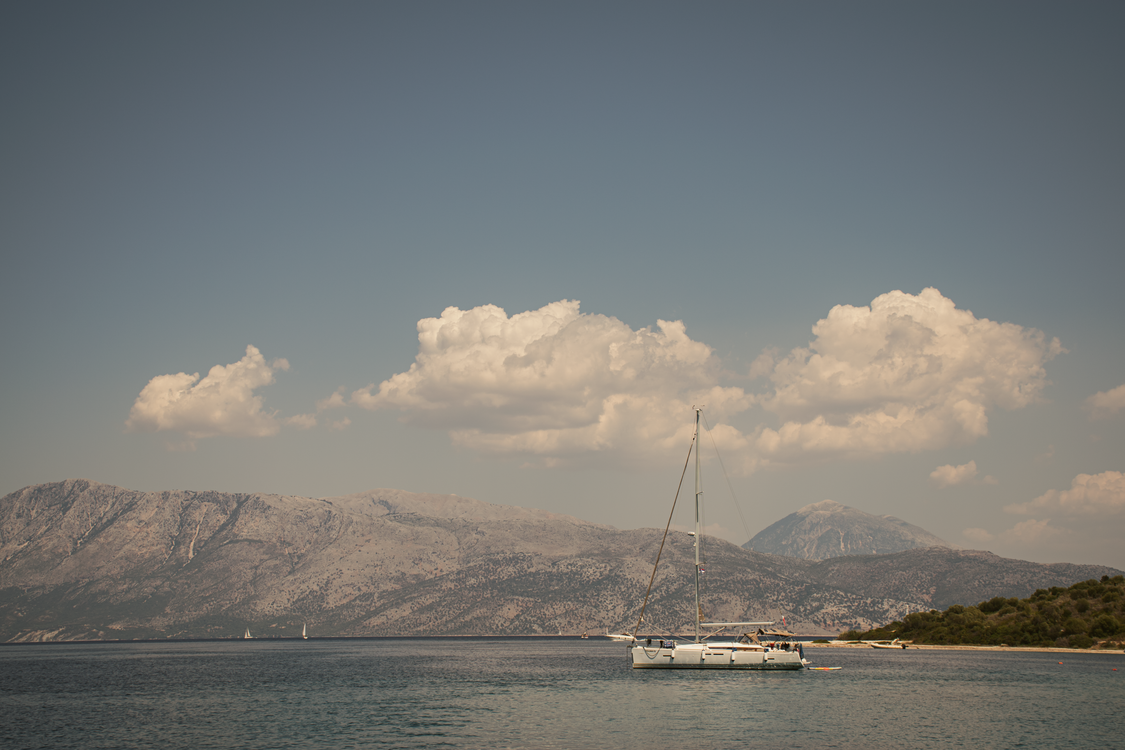
The Ionian Sea is often considered the most beginner-friendly sailing region in Greece, and for good reason. With mild winds, short distances between islands, and plenty of protected bays, the Ionian offers a relaxed cruising experience that suits families, couples, and casual sailors alike.
Unlike the Aegean, where strong Meltemi winds can make sailing a real challenge, the Ionian’s gentle breezes mean less heeling, calmer passages, and fewer weather-related surprises. This makes it an ideal testing ground for both catamarans and monohulls. If you want to learn more about the Ionian Sea and its destinations, check our blog.
But here’s the key: while both types perform well here, the Ionian’s protected moorings, well-developed marina network, and shallower anchorages often highlight the strengths of a catamaran, especially for groups looking for space and comfort. On the other hand, monohulls offer that classic sailing feel, and their slimmer shape makes them easier to berth in small island harbors.
So, how do you choose? Let’s take a closer look at each option.
2. Catamaran Comfort – Space, Stability & Social Living
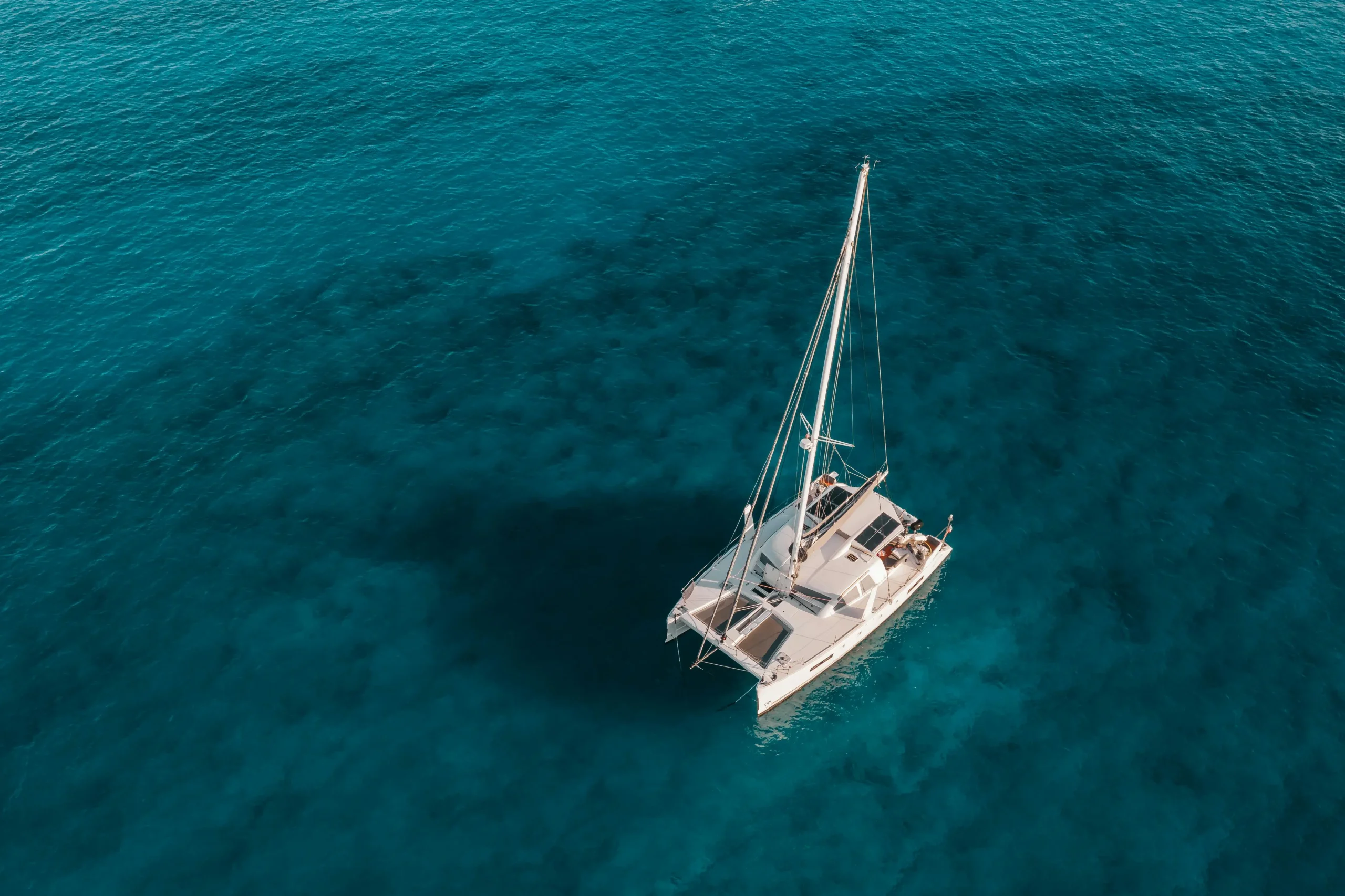
One of the biggest reasons many sailors choose a catamaran for their Ionian adventure is the comfort. Thanks to their twin-hull design, catamarans offer far more living space than monohulls, both inside and out. This makes them especially appealing for families with children, larger groups, or anyone who values privacy and room to spread out.
With wide saloons, open-plan cockpits, and spacious decks, life aboard a catamaran feels airy and social. Everyone can enjoy time together without feeling cramped. Most cabins come with en-suite bathrooms, and the dual hulls often separate sleeping quarters, perfect if you’re traveling with kids or multiple couples.
Another major advantage is stability. Because catamarans don’t heel (tilt) as much as monohulls under sail, they provide a more comfortable ride, especially for those who are prone to seasickness or new to sailing. In the gentle conditions of the Ionian, this stability allows for relaxed lunches underway, safe movement around the deck, and stress-free sleeping at anchor.
In addition, catamarans have shallower drafts, which means they can anchor closer to shore and access hidden coves and bays that monohulls may not reach, a huge advantage when exploring the Ionian’s scenic coastline and tranquil anchorages.
> Read more: A Comprehensive Lagoon 52 Review
> Read more: Sailing with a Catamaran – Why it’s the best choice
3. Monohull Sailing – Tradition, Handling & Cost
If you’re looking for a classic sailing experience, a monohull may be your vessel of choice. Sleek, responsive, and deeply rooted in tradition, monohulls are often preferred by experienced sailors who enjoy the sensation of heeling with the wind and navigating with precision.
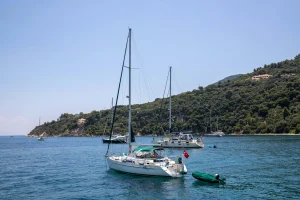
Monohulls typically perform better upwind than catamarans and are more agile when tacking and jibing, which can be especially satisfying if you’re an active sailor who enjoys trimming sails and feeling the boat respond beneath your feet.
They also tend to be more budget-friendly, both in terms of charter price and marina fees. Because they are narrower, monohulls take up less space at docks and often pay lower berthing rates. Fuel consumption is also slightly lower, especially on engine-only passages.
Inside, monohulls offer less space than catamarans, especially in communal areas, but modern designs have become much more comfortable in recent years. You’ll still find cozy saloons, functional galleys, and double cabins suited for couples or small families.
While monohulls may lack the extra space and flat ride of catamarans, they offer a more connected and traditional sailing experience that many purists love. And in the calm waters of the Ionian, it’s an experience you can enjoy without the fatigue and stress often associated with rougher seas elsewhere.
> Read more: Sustainable Sailing – Is It Possible?
4. Maneuvering, Mooring & Marina Space in the Ionian
When sailing the Ionian Sea, one of the key practical considerations is how your yacht handles in tight spaces, especially when docking in smaller island ports or anchoring in cozy bays.
Catamarans: Stability vs. Size
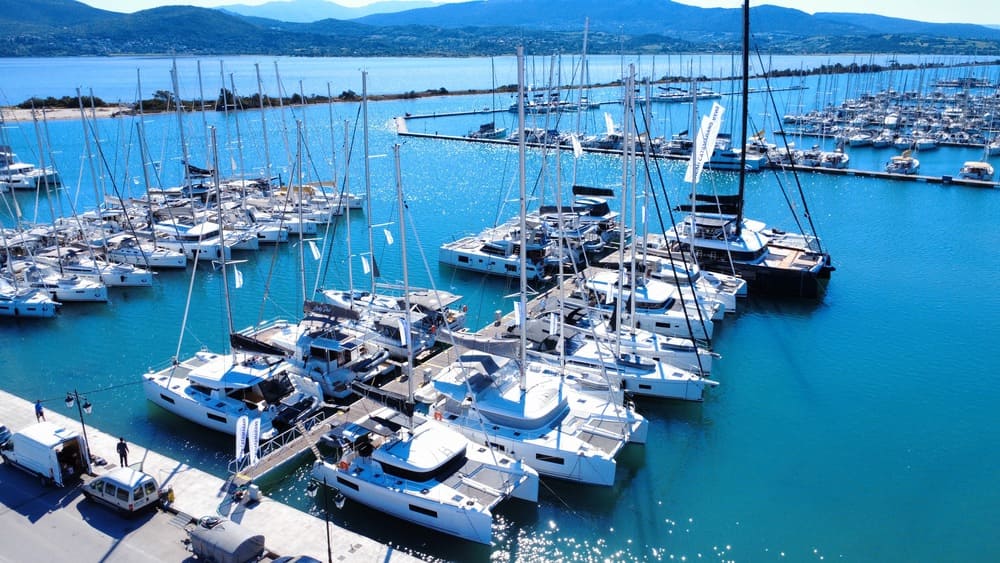
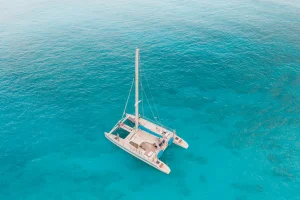
Catamarans are known for their stability at anchor and ease when mooring stern-to, thanks to their dual engines, which allow for tight turning and excellent control in reverse. However, they are also much wider, meaning they can take up twice the space of a monohull in a crowded marina. In peak season, especially in smaller harbors like Sivota, Frikes, or Gaios, this can limit available spots.
Many Ionian ports do accommodate catamarans, and early arrivals or pre-booked berths usually solve this issue. But if you’re planning to hop between smaller or more remote harbors, it’s something to factor in.
Monohulls: Slim Profile, Easier Fit
Monohulls excel in space-constrained marinas. Their narrow beam allows them to slot into tighter berths, and they’re generally the preferred option in ports with limited dock space. While they don’t offer the same lateral stability as catamarans, their compact size can be a big asset when exploring quaint harbors or rustic fishing villages that dot the Ionian coastline.
Whether you’re planning to moor every night or mix in a few quiet anchorages, both yacht types are manageable in the Ionian. But if you plan to visit the smaller, less-developed islands, a monohull might give you more flexibility when finding a spot late in the day.
5. Cost Comparison – Charter Price, Fuel & Mooring Fees
When deciding between catamaran or monohull sailing in Greece, cost is often a key factor, especially for families or groups planning a week-long adventure in the Ionian.
Charter Price
In general, catamarans are more expensive to charter than monohulls. Their popularity, larger living space, and higher market value mean you’ll typically pay 20–40% more for a catamaran of the same age and condition. However, because catamarans can comfortably sleep more people, the cost per person may still be reasonable for larger groups.
Monohulls are more budget-friendly, especially for smaller crews. A couple or a small family can easily enjoy a week on a 38–45ft monohull with lower charter costs and simpler systems to manage onboard.
Fuel Consumption
Catamarans tend to consume more fuel, primarily due to their dual engines and larger surface area. But in the Ionian, where sailing legs are short and conditions are calm, fuel usage is generally low for both yacht types, unless motoring becomes frequent due to lack of wind.
Mooring & Marina Fees
Because catamarans take up more space in marinas, they often incur higher mooring fees, sometimes up to 1.5x the cost of a monohull. In popular Ionian ports like Lefkas or Gouvia, this difference adds up over a week, especially in high season.
That said, many Ionian destinations offer free or low-cost mooring if you dine at a local taverna or anchor off in protected bays. Catamarans, with their shallow draft and extra stability, are ideal for overnight anchoring, which can help offset some of the cost difference.
Catamaran vs Monohull bottom line:
- Monohull = Lower base cost, marina fees, and fuel
- Catamaran = More space and comfort, but with a higher price tag
If budget is tight, a monohull is a smart and satisfying choice. But if you’re seeking space and are traveling with a larger group, the extra cost of a catamaran may be worth every euro, especially in the easy, anchorage-rich waters of the Ionian.
Ready to sail the Ionian Sea?
> Choose one of our Sailing Catamarans
> Choose one of our Sailing Yachts
Final Thoughts: Which Yacht Is Right for You?
So, what to choose – catamaran or monohull sailing in Greece? If you’re heading to the Ionian Sea, the decision depends on your group’s size, sailing experience, budget, and priorities.
- Choose a catamaran if you value comfort, space, stability, and want an ideal platform for relaxing, swimming, and spending time together. It’s perfect for families, first-time sailors, or groups wanting to anchor off scenic bays and enjoy gentle sailing days.
- Opt for a monohull if you’re after classic sailing, lower charter and mooring costs, and easier maneuverability in the smaller harbors that line the Ionian coastline. A great pick for couples, smaller groups, or more hands-on sailors who love the feel of the wind.
Our tip? In the Ionian Sea, with its calm conditions, short distances, and abundance of sheltered anchorages, both vessel types perform well, but catamarans offer an edge when it comes to comfort and relaxation.
Still unsure? Check our Yacht Fleet page and explore our available catamarans and monohulls ready to sail the Ionian Sea.
Let us help you choose the perfect yacht for your next sailing holiday. Contact us for tailored advice and booking options.