The Ionian Sea is famous for its predictable, calm sailing conditions, which, in the sailing world, is rather like being famous for showing up on time and not causing drama. It’s one of the most reliable and beginner-friendly yacht charter destinations in the Mediterranean, offering gentle afternoon breezes, calm seas, and countless protected anchorages where you can actually sleep at night. A novel concept.
This guide provides a comprehensive, season-by-season overview of Ionian sailing weather, designed to help long-haul travellers and first-time sailors set realistic expectations and plan the perfect trip without requiring a degree in meteorology.
Quick Answer: Ionian Sailing Weather at a Glance
The Ionian Sea offers some of the most predictable and forgiving sailing weather in Greece, which is to say, it won’t spend the week trying to kill you. Winds are moderate, seas are calm, and weather patterns follow a reliable daily rhythm, especially during the main sailing season from May to September.
- Predictable Winds: The primary summer wind is the Maistros (Maestro), a north-westerly sea breeze that builds gently around midday, peaks in the afternoon at Force 3–5, and dies down by sunset. It’s refreshingly punctual—unlike your average ferry schedule.
- Calm Seas: The Ionian is largely protected from the strong, gusty Meltemi wind that dominates the Aegean Sea. This means calmer waters, fewer large waves, and more time actually enjoying your holiday rather than clinging to the nearest grab rail.
- Sheltered Anchorages: The islands are close together and offer countless deep, protected bays. You’ll find safe and calm overnight anchorages regardless of wind direction—assuming, of course, you can find space between the other yachts who’ve also discovered this fact.
- Ideal for Beginners: The combination of predictable winds, calm seas, and short island-hopping distances makes the Ionian the perfect training ground for new sailors. It’s difficult to look incompetent when the weather is actively helping you succeed.
- Best Time to Sail: For the smoothest conditions, June and September are ideal, offering warm weather, reliable winds, and fewer people blocking your favourite anchorage. July and August are hotter and busier but still offer excellent, predictable sailing weather.
Why Weather Matters for Long-Haul Sailors in the Ionian
For sailors flying from Australia or other long-haul destinations, weather reliability isn’t just a preference; it’s non-negotiable. When you’ve spent 24 hours in various airport lounges and your annual leave balance has taken a substantial hit, you want absolute confidence that conditions will support a relaxed, enjoyable week on the water, not a nautical endurance test.
This is where the Ionian earns its keep. Its weather allows crews to ease into sailing, recover from jet lag, and enjoy shorter daily passages without the pressure of beating into 30-knot winds or explaining to your non-sailing partner why you’re spending the holiday in a marina.
When you’ve travelled halfway around the world, you want:
Reliability: The assurance that you can sail almost every day without being confined to port due to high winds. Being stuck in a marina watching Netflix is considerably cheaper than doing so at home.
Comfort: Calm seas that make for pleasant passages, enjoyable meals at anchor (that actually stay on the table), and restful nights. Revolutionary concepts, all of them.
Safety: Forgiving conditions that reduce stress, especially for those sailing with family or less experienced crew who may have been promised a “relaxing sailing holiday” without the fine print about white-knuckle sailing.
Unlike other sailing areas where you might lose days to strong gales and subsequently, your deposit due to hastily made poor decisions, the Ionian’s weather patterns allow you to maximize your time on the water. It’s a destination where you can confidently plan a week-long charter knowing the conditions will almost certainly cooperate. This reliability is the ultimate luxury for a long-haul traveller, and far more valuable than a swim-up bar.
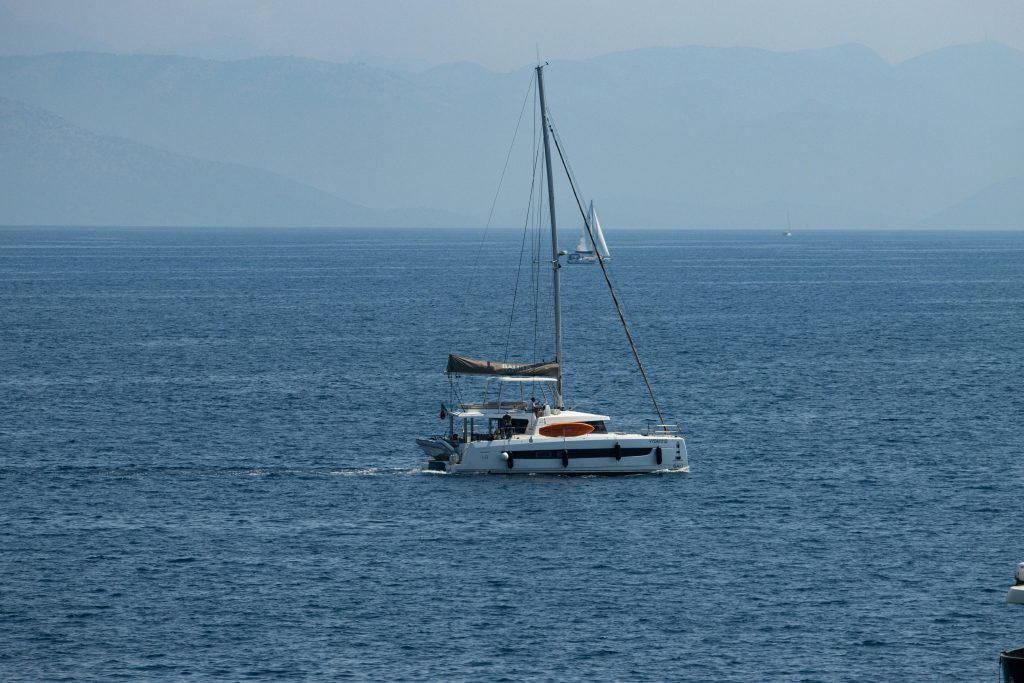
Ionian vs Aegean Weather: Why the Ionian Is Easier for First-Time Sailors
One of the most common questions from international guests is whether they should choose the Ionian or the Aegean. The key difference lies in wind strength and predictability, or, put more bluntly, whether you want a sailing holiday or an extreme sports documentary.
The Aegean Sea (home to the Cyclades islands like Mykonos and Santorini) is dominated by the Meltemi, a strong northerly wind that can blow for days, often reaching 25–35 knots in summer. While exciting for experienced sailors who enjoy phrases like “bloody hell, hold on,” it can be exhausting for beginners and somewhat tiresome over a full week.
> Read More: Why the Ionian Islands Are Perfect for First-Time Sailing Holidays in Greece
Meltemi Characteristics (Aegean):
- Strength: Often reaches Force 6–8 (22–40 knots) and can blow for days without stopping, as if personally offended by your holiday plans.
- Gusts: It’s gusty and can create steep, uncomfortable waves, especially in open passages—ideal if you’ve always wanted to test the efficacy of seasickness medication.
- Unpredictability: It can start suddenly and may force charterers to stay in port for several days, which is lovely for the local taverna owners but less ideal for your itinerary.
In contrast, the Ionian Sea is shaped by the Maistros, a north-westerly breeze that typically builds gently in the afternoon and fades by evening. Mornings are usually calm, seas remain moderate, and anchorages are well protected. It’s all rather civilized.
Maistros Characteristics (Ionian):
- Strength: A predictable thermal wind that builds to a pleasant Force 3–5 (7–21 knots) in the afternoon, enough to sail nicely, not enough to traumatize the crew.
- Pattern: It follows a reliable daily cycle: calm mornings for coffee and a leisurely departure, breezy afternoons for actual sailing, and calm evenings for anchoring and pretending you knew what you were doing all along.
- Calm Seas: The winds aren’t strong enough to create large, uncomfortable seas, and the islands’ proximity provides constant shelter. You can actually read a book on deck without it becoming a wrestling match with the pages.
For first-time sailors, families, and mixed-experience crews, this means:
- Smoother passages
- Fewer weather-related itinerary changes (and subsequent crew mutinies)
- Calmer nights at anchor
- A more relaxed daily rhythm that doesn’t require constant vigilance
This difference alone is why many first-time sailors, and sensible long-haul travellers, choose the Ionian. It turns out that “predictable and pleasant” has considerable appeal when you’ve invested significant time and money into a holiday.
> Read More: Mistakes First-Time Sailors Make in the Ionian
Why is Ionian Sailing Weather So Predictable?
The Ionian Sea is one of the Mediterranean’s most predictable sailing destinations, thanks to three key factors: the Maistros thermal wind system, which follows a reliable daily cycle; an island-dense geography that limits fetch and buffers wave development; and stable summer high-pressure systems that suppress storm risk. Together, these conditions create manageable, forecastable sailing weather with calm mornings, steady afternoon breezes, and rare multi-day disruptions — making the Ionian an ideal choice for both first-time sailors and experienced charter guests.
> Read More: The Ionian’s Secret: Predictable Weather You Can Actually Plan Around
Ionian Sailing Weather by Season
Spring (April–May): Fresh, Green, and Blissfully Quiet
Spring brings mild temperatures, blooming landscapes, and fewer boats, which is to say, you might actually find an anchorage without circling like a shark for twenty minutes. Winds are light to moderate, and the sea is generally calm, though water temperatures remain cool enough to discourage extended swimming sessions.
Winds: The thermal Maistros wind hasn’t yet established its daily routine. You may experience a mix of conditions, including calm days, southerly breezes, or occasional rain showers. Winds are generally light (Force 2–4), civilized, in other words.
Temperatures: Air temperatures are pleasant for hiking and exploring (18–22°C), but the sea is still cool for swimming (16–19°C). Refreshing if you’re optimistic; bracing if you’re honest.
Best for: Couples seeking peace and quiet, experienced sailors comfortable with variability, and anyone who values having anchorages to themselves.
Early Summer (June): The Goldilocks Month
June is often considered one of the best months to sail the Ionian, not too hot, not too cold, not too crowded. It’s the month that travel magazines would choose if they were being honest rather than promotional.
Winds: The Maistros is now reliably established. Expect calm mornings followed by north-westerly breezes of Force 3–5 in the afternoon, perfect for a leisurely sail to your next destination without requiring heroic feats of seamanship.
Temperatures: The weather is warm and sunny (25–28°C), and the sea has warmed up enough for comfortable swimming (20–22°C). You can actually enjoy the water rather than merely surviving it.
Best for: First-time sailors who’d prefer not to be immediately tested by the elements, families with children who have strong opinions about swimming, and catamaran charters where stability is rather the point.
Peak Summer (July–August): Warm, Predictable, and Somewhat Busy
During peak season, temperatures rise to levels that make air conditioning a lifestyle choice rather than a luxury. However, the Maistros provides natural afternoon cooling, assuming you’re actually sailing rather than motoring, which would be missing the point entirely.
Winds: The Maistros is at its most consistent, blowing almost every day from the north-west at Force 3–5. It starts around 1:00 PM and fades by 7:00 PM, creating a predictable daily rhythm. You can practically set your watch by it, though your watch likely has better things to do.
Temperatures: This is the hottest time of year (30–35°C+). The sea is wonderfully warm (24–26°C), perfect for swimming, water sports, and extended lounging about, which, let’s be honest, is largely why you’re here.
Best for: Long-haul guests who’ve planned this trip for months, mixed-experience crews who need forgiving conditions, and anyone whose idea of sailing involves equal parts actual sailing and floating about in turquoise bays.
Late Season (September–October): Calm, Warm, and Refreshingly Mature
Late summer offers warm seas, softer light for photography, and fewer crowds—the trifecta of ideal sailing conditions for those who find July and August rather too… populous.
Winds: The Maistros continue to blow reliably through September, though it may be slightly less intense than in August. By October, it becomes less predictable, and you may experience calmer days or southerly winds. Motorsailing becomes a distinct possibility, though we don’t speak of this in polite company.
Temperatures: September is pleasantly warm (25–28°C), and the sea is at its warmest (23–25°C), genuinely comfortable for swimming without the mental preparation. In October, temperatures cool down (20–24°C), but the sea remains swimmable for anyone not raised in tropical waters.
Best for: Photographers who appreciate the softer light, repeat guests who know what they’re doing, and slower itineraries that prioritize quality over quantity.
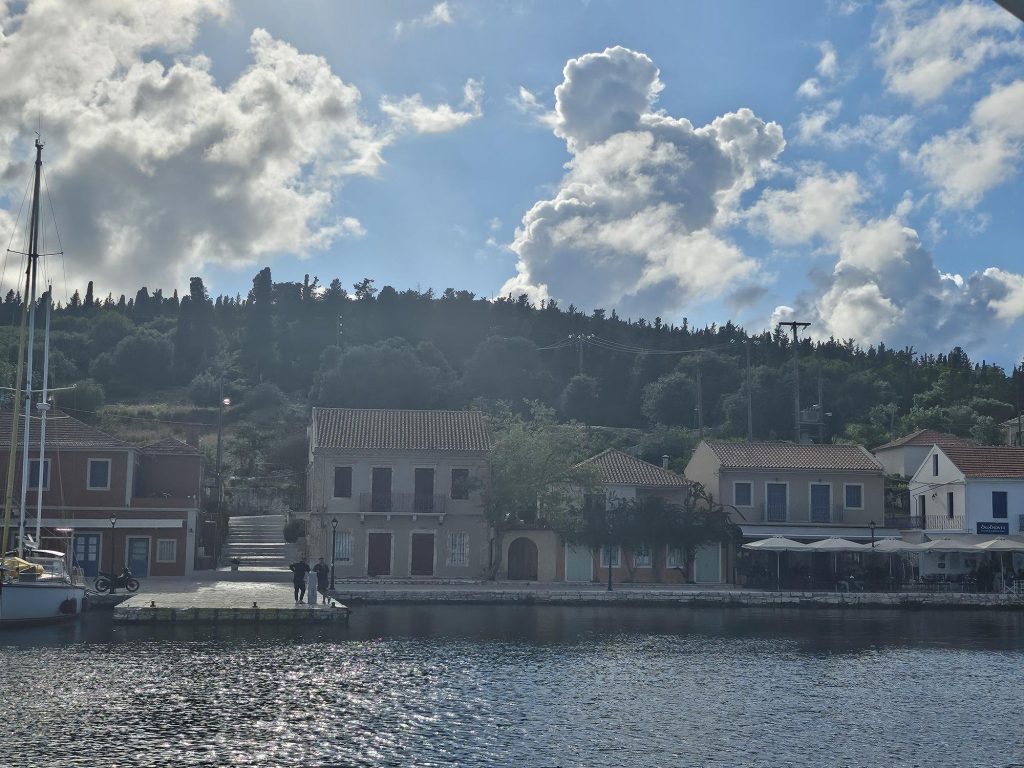
Autumn turns the Ionian into a two-for-one deal: warm enough to swim, cool enough to actually enjoy the walk beforehand. We covered how to pair catamaran sailing with hiking, cycling, snorkelling, kayaking and cave exploring across Lefkas, Corfu and Kefalonia between mid-September and mid-October — using the boat as a mobile base rather than choosing between a sailing holiday and an active one.
Best Months for Smooth Sailing in the Ionian Sea
While sailing is possible from April to October, the smoothest conditions are typically found between May and September. This shouldn’t be confused with “only these months are good”; rather, they’re the months where the weather is most likely to behave consistently.
- June and September offer the best balance of weather, water temperature, and crowd levels, the sweet spot for those who plan ahead.
- July and August provide the most predictable wind patterns and warmest seas, though you’ll be sharing this discovery with most of Europe.
- May is excellent for quieter sailing, with occasional weather variability that keeps things interesting without becoming problematic.
For Australians planning far in advance, as one must when flying halfway around the planet, these months offer the highest confidence of ideal conditions. Book early, pack sensibly, and prepare to be pleasantly surprised by how cooperative the weather can be.
June or September? Choosing the Right Month for Your Ionian Charter
Both June and September are among the best months to sail the Ionian — not as a consolation prize for whichever one you didn’t pick, but because both genuinely deliver. The Ionians’ stable conditions and forgiving geography make either month a strong choice; the decision comes down to what matters most to you.
- Choose June for predictable weather, quieter marinas, and a relaxed early-summer pace.
- Choose September for warmer sea temperatures, reduced crowds, and what many experienced sailors consider the most well-rounded month in the Ionian calendar.
In short:
- June = predictability, easy logistics, lighter crowds
- September = warmer water, mature summer conditions, excellent overall balance
The Maistros Wind Explained
The Maistros is the Ionians’ defining wind, and understanding it is rather like understanding the daily rhythm of a particularly reliable friend. It usually:
- Builds gently after midday as the land heats up
- Peaks in the afternoon at moderate strength (Force 3–5)
- Fades by evening as temperatures cool
This rhythm allows sailors to plan morning passages while conditions are calm, sail in the afternoon when there’s actually wind, and spend evenings swimming or relaxing without being blown about. Unlike stronger regional winds—we’re looking at you, Meltemi—the Maistros rarely disrupt entire itineraries or require emergency plan revisions.
It’s a thermal wind, meaning it’s created by temperature differences between land and sea. This makes it predictable, reliable, and thoroughly civilized, three qualities that are somewhat underrated in sailing winds.
> Read More: A Guide to Ionian Winds: What to Expect and When
Ionian Weather: Expectations vs Reality
|
Expectation |
Reality |
| Strong daily winds | Mostly moderate afternoon breezes – quite pleasant, actually |
| Rough seas | Generally smooth, sheltered waters – you might even forget you’re on a boat |
| Weather-driven delays | Rare and short-lived – your itinerary will likely survive intact |
| Stressful sailing | Calm, forgiving conditions – stress levels remain reassuringly low |
Frequently Asked Questions
1. Is Ionian sailing weather suitable for beginners?
Yes. It’s considered one of the safest and most predictable regions in the Mediterranean, which means you can learn without the baptism-by-fire approach favoured by other sailing areas.
2. Is the Ionian better than the Aegean for families?
Yes. Gentler winds and shorter distances make it more comfortable for everyone, particularly those crew members who didn’t actually volunteer for this holiday.
3. Can the weather disrupt a full week of sailing?
Rarely. Most changes are minor and easily managed. You might lose an afternoon to unexpected calm, but you’re unlikely to lose entire days to storms or excessive wind.
4. Is the Ionian good for catamarans?
Very much so. Wide bays, calm seas, and easy anchoring make it ideal. Catamarans excel in these conditions, which is convenient given that’s what most people charter.
5. What if I’m concerned about seasickness?
The Ionians’ calm seas and protected waters make it one of the best destinations for those prone to seasickness. You’ll spend most of your time in sheltered areas with minimal swell, and passages are short enough that even sensitive sailors usually manage quite well.
Final Thoughts: Why the Ionian Inspires Confidence
The Ionian Sea doesn’t just offer beautiful scenery; it offers reassurance. Predictable weather, gentle winds, and a natural sailing rhythm make it one of the most welcoming regions in Greece. It’s the sailing destination that actually wants you to succeed, which is refreshing in a sport that often seems designed to humble its participants.
For sailors travelling from afar, especially from Australia, that predictability transforms a holiday into a true escape. You don’t sail against the weather in the Ionian, you sail with it. The wind fills in when you want it to, calms down when you’re ready to anchor, and generally behaves as if it’s been properly briefed on your itinerary.
And that is exactly why so many first-time sailors choose it and return. Because there’s something deeply satisfying about a sailing holiday where the weather cooperates, the anchorages are stunning, and the most stressful decision you’ll make is which taverna to visit for dinner.
The Ionian understands that not everyone wants an adventure. Sometimes, people just want a thoroughly lovely time on the water, and there’s absolutely nothing wrong with that.