Quick Answer: 6 Common First-Time Sailing Mistakes in the Ionian
- Overambitious Itineraries: First-time charterers often create packed, point-to-point itineraries, trying to visit a new island every day. The Ionians’ short passages make this seem feasible, but it leads to rushing and stress.
- Underestimating Total Journey Time: While sailing distances are short, new sailors forget to factor in time for mooring, provisioning, exploring ashore, and simply relaxing. A two-hour sail can easily consume half a day.
- Ignoring Anchorages: Many beginners default to seeking a marina or town quay every night. They miss out on the Ionians’ greatest treasures: their serene, crystal-clear anchorages, which offer more peace and flexibility.
- Misunderstanding Wind Patterns: Sailors new to the area may not account for the reliable afternoon ‘Maistros’ wind. Without planning for it, they can find themselves beating into a 20-knot headwind to get to their destination.
- Fixating on a Rigid Plan: The Ionian rewards flexibility. Sticking to a strict plan means you can’t linger in a beautiful bay you discover or change course to find a more sheltered spot if conditions change.
- Choosing the Wrong Starting Base: Selecting a base solely on flight availability, without considering the desired pace of travel (e.g., Lefkas for beginners, Corfu for culture), can lead to unnecessarily long first and last sailing days.
The Core Principle: The key to a perfect Ionian holiday is to slow down. Plan less, sail shorter distances, and embrace the freedom of anchoring. The less you try to do, the more you will actually experience.
> Browse Ionian Catamaran’s Yacht
The Ionian Sea is rightfully known as one of the world’s premier sailing destinations for newcomers. With its famously calm conditions, sheltered waters, and short island-hopping passages, it offers a forgiving environment to build confidence. Yet, it’s this very reputation for being “easy” that often leads first-time sailors into preventable mistakes. The perception of simplicity can create a sense of overconfidence, causing crews to plan itineraries better suited for a road trip than a sailing holiday. The result is often a rushed, stressful week that misses the very essence of what makes this region so magical: its unhurried pace and tranquil beauty.
> Read More: Why the Ionian Islands Are Perfect for First-Time Sailing Holidays in Greece
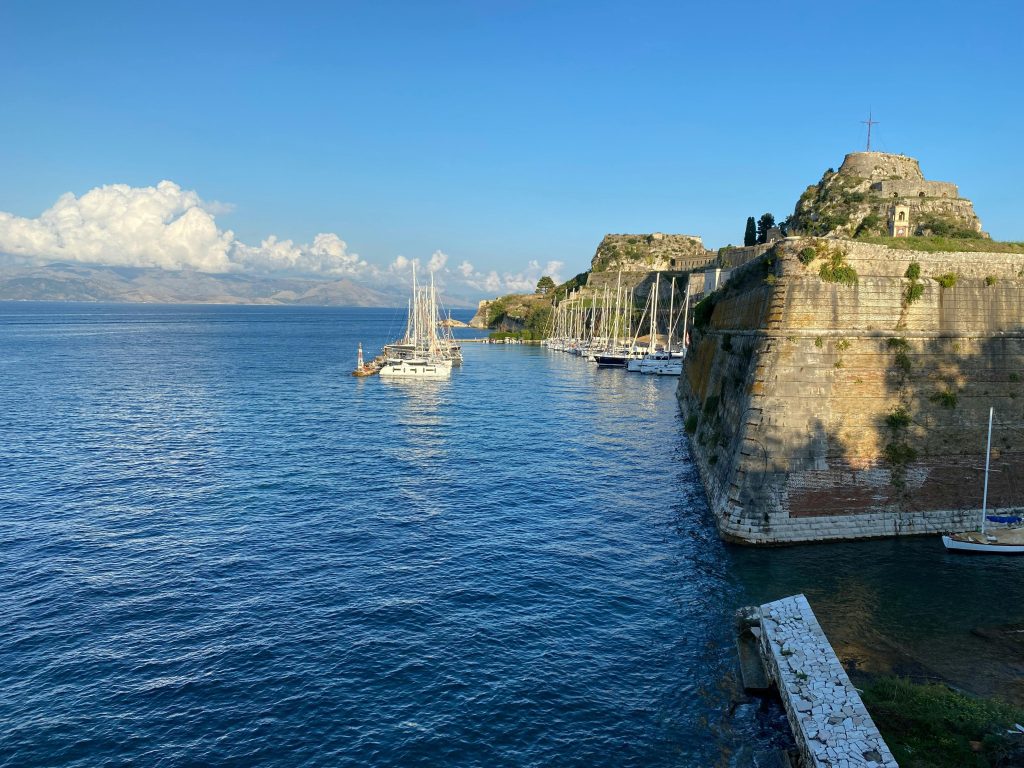
Mistake #1: Trying to See Too Much in One Week
One of the most common errors we see is an itinerary that treats the Ionian islands like a checklist. A typical plan might involve sailing from Lefkas to Fiskardo (Kefalonia), then to Vathy (Ithaca), then across to Kalamos, and back via Meganisi — all in seven days. On paper, the nautical miles seem manageable.
Want to sail the Route of Odysseus? Check out our Guide to the Mythical Journey.
Why it happens in the Ionian: The islands appear so close together on the chart that it’s tempting to try to visit them all. From a base like Palairos or Lefkas, you can see several islands on the horizon, making a multi-island tour seem deceptively simple.
How to avoid it: Focus on one small island group. For a one-week charter, we advise exploring the ‘Inland Sea’ between Lefkas, Ithaca, and the mainland. Choose two or three primary destinations and allow for spontaneous stops. Instead of rushing to a new town quay each night, spend a couple of nights in a secluded bay on Meganisi or exploring the quiet coves of northern Ithaca.
Mistake #2: Underestimating Daily Sailing Time
A ten-mile passage sounds like a quick two-hour trip. First-time sailors often plan their day around this assumption, expecting to arrive at their destination by lunchtime with a full afternoon to explore. This rarely proves to be the case.
Why does it happen in the Ionian: The focus is purely on the sailing duration. New crews forget the time it takes to prepare the yacht for departure, hoist the sails, drop anchor, set mooring lines, and launch the dinghy. A simple swim stop can add an hour. If you need to provision, that’s another hour. Suddenly, your two-hour sail has consumed the entire day.
How to avoid it: Double your time estimate. If you think a passage will take two hours, budget four. This simple rule of thumb accounts for all the small tasks that surround the actual sailing. It removes the pressure to rush and transforms the journey from a race into a relaxing part of the holiday.

Mistake #3: Relying on Marinas and Town Quays
For many new to a catamaran charter in the Ionian, the default evening plan is to find a spot in a marina or on a busy town quay. They offer the security of lazy lines, power, and water, plus immediate access to tavernas.
Why does it happen in the Ionian: It feels safe and familiar. The process of anchoring, especially overnight, can seem intimidating to beginners. Furthermore, popular guides and blogs often highlight the main ports, creating the impression that they are the only places to stay. This leads to a frantic afternoon rush as dozens of yachts compete for limited space in places like Sivota or Fiskardo.
How to avoid it: Learn to love your anchor. The Ionian is blessed with hundreds of spectacular, well-protected anchorages with excellent holding. Your charter briefing should cover proper anchoring technique. Start by anchoring for lunch in a calm bay to build confidence. Soon, you’ll discover the joy of waking up in a peaceful cove with only the sound of nature, diving into turquoise water from your own swim platform.
> Discover the Hidden Anchorages in the Ionian Sea
Mistake #4: Not Planning for the Maistros Wind
The Ionian has a wonderfully predictable thermal wind pattern in the summer months, known as the Maistros. It typically builds from the northwest around midday, blowing at a pleasant Force 3-5, and dies down around sunset.
Why does it happen in the Ionian: Sailors unfamiliar with the region often don’t incorporate this pattern into their planning. They might plan a 15-mile sail north in the afternoon, only to find themselves battling a 20-knot headwind and choppy seas. What should have been a gentle sail becomes an uncomfortable and lengthy motor-sail.
How to avoid it: Plan your daily route with the Maistros in mind. If you need to travel north, do it in the morning when the conditions are calmest. In the afternoon, enjoy a fantastic beam or downwind reach by sailing south or east. Use the wind to your advantage, not as an obstacle.
> Read our Guide to Ionian Winds: What to Expect and When
Mistake #5: Choosing the Wrong Starting Base
Not all Ionian charter bases offer the same experience, yet many first-time sailors choose based solely on flight availability. Each base shapes the rhythm of your trip.
Why does it happen in the Ionian? The region looks compact, so differences between bases are easy to underestimate.
How to avoid it: Match your base to your expectations. Lefkas is ideal for beginners and families, with short distances and protected routes. Corfu is better for culture and exploring the northern Ionian islands. Palairos is perfect for quieter itineraries and cruising adjacent to the mainland. The right base simplifies everything that follows. You can find Ionian Catamaran’s bases in all those 3 locations:
> Lefkas Charter Base
Beginner Expectation vs. Smarter Ionian Approach
| Common Mistake (Expectation) | Smarter Approach (Ionian Reality) |
|---|---|
| Itinerary: Visit 5-6 islands in a week. | Itinerary: Explore 2-3 core locations deeply. |
| Pacing: Rush to a new port every day. | Pacing: Stay 1-2 nights in a great spot; sail for a few hours. |
| Overnights: Aim for a town quay or marina. | Overnights: Prioritize quiet anchorages; visit towns by day. |
| Planning: Follow a rigid, pre-planned route. | Planning: Have a loose goal, but adapt to wind and discoveries. |
| Mindset: The destination is the goal. | Mindset: The journey and the moments in between are the goal. |
Frequently Asked Questions (FAQ)
Is the Ionian really beginner-friendly? Yes, absolutely. The waters are sheltered, passages are short, and the summer winds are generally predictable and moderate. It is arguably the best place in the Mediterranean for a first charter.
How many miles should you sail per day? We recommend aiming for no more than 10-15 nautical miles per sailing day. This equates to 2-3 hours of sailing, leaving ample time for swimming, lunch at anchor, and relaxing.
Do you need a skipper as a first-timer? If you have the required qualifications but are low on confidence, a skipper for the first few days can be a great option. If you have limited or no experience, a skipper for the full week is essential for both safety and enjoyment.
Is one week enough in the Ionian? One week is enough to have a wonderful holiday, but only if you keep your ambitions in check. There is not enough time to see everything. A two-week charter allows for a much more relaxed and immersive experience.
Final Thoughts
The magic of an Ionian Sea sailing holiday reveals itself when you stop trying to conquer it. It’s found in the quiet mornings in a deserted cove, the long lunches with your feet dangling in the water, and the gentle afternoon sails powered by a warm breeze.
The most experienced sailors we know are the ones who travel the fewest miles. They understand that the true luxury of a yacht charter in the Ionian isn’t about how many places you can visit, but about how deeply you can connect with the few places you do. By slowing down and simplifying your plans, you give yourself the gift of time — the most precious commodity of all.
Ready to experience sailing in the Ionian in a proper way? Enquire now for one of our yachts!