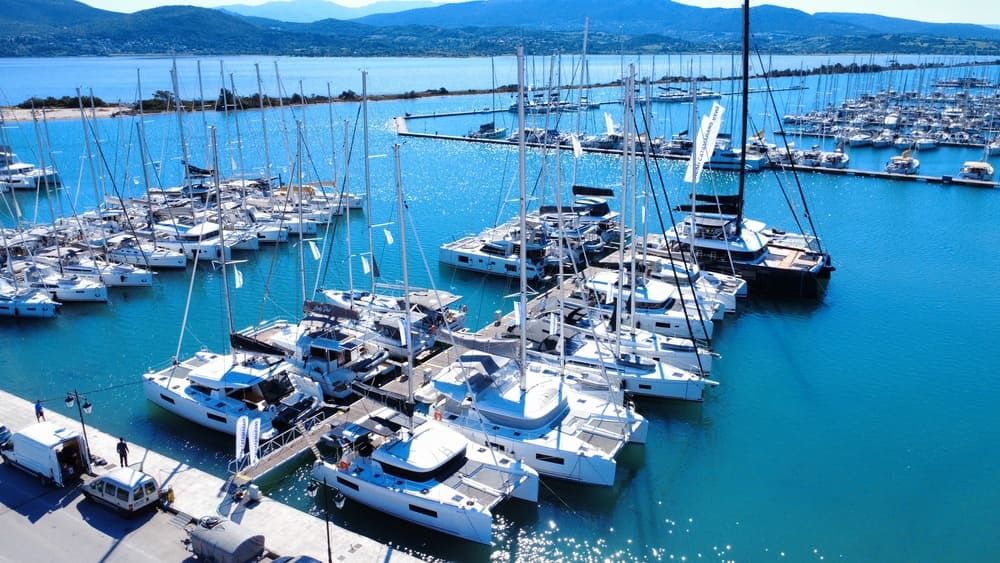
Good marina etiquette in Greece comes down to four habits: call ahead, prepare your fenders and lines before you manoeuvre, keep the noise reasonable, and follow the rules of the specific marina you are in. Do that, and your Ionian arrival will be uneventful, which is precisely the aim.
> Read More: Understanding Greek Sailing Culture: Local Practices Every Charter Sailor Should Know
A Definition of Good Marina Etiquette in Greece
Good marina etiquette in Greece means communicating before arrival, preparing your crew before manoeuvring, respecting neighbouring yachts and following the rules of each marina or harbour.
For charter sailors in the Ionian, the essentials are simple:
- Contact managed marinas before entering and follow their berthing instructions.
- Prepare fenders and lines before approaching your berth.
- Tell marina staff you are arriving in a catamaran, and give its length and beam.
- Keep music, conversation and other noise respectful, particularly during Greece’s official quiet hours.
- Never assume an empty section of quay is available.
- Keep cables, hoses, luggage and equipment off shared walkways.
- Never discharge waste into marina waters.
- Check marina-specific rules on generators, swimming, pets and other activities.
At D-Marin Gouvia on Corfu and D-Marin Lefkas, for example, generator use, recreational swimming and waste discharge into marina waters are all prohibited. Both currently publish VHF Channel 69 for arrivals. If you are planning an Ionian charter with Ionian Catamarans, knowing these small rules before departure makes arrival easier for your crew, your neighbours and the marina staff.
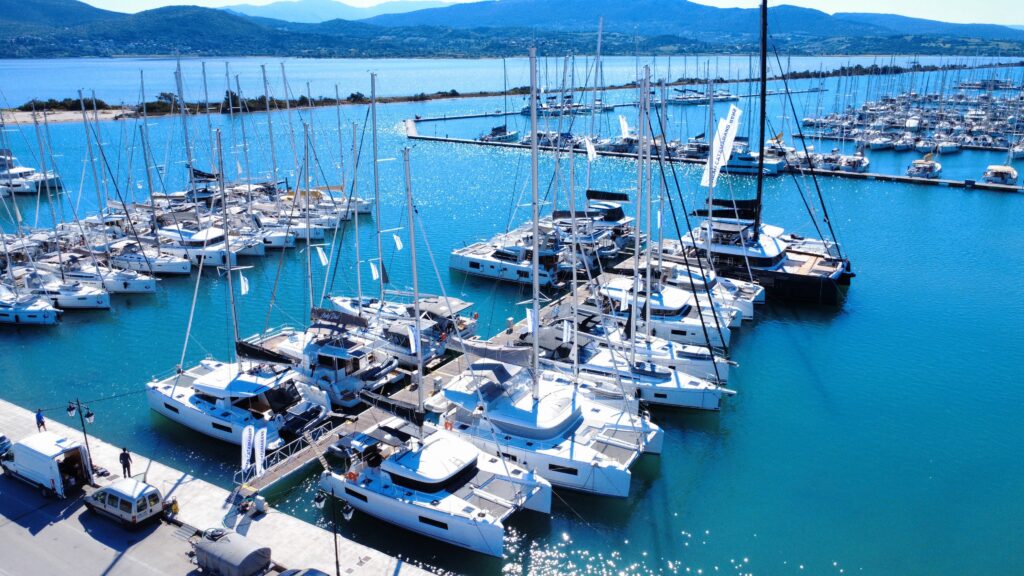
How Does Etiquette Differ Between an Ionian Marina and a Town Quay?
An organised marina normally has clearer procedures, allocated berths and dedicated facilities. A town quay asks for more awareness of local harbour activity and of how much space is genuinely free.
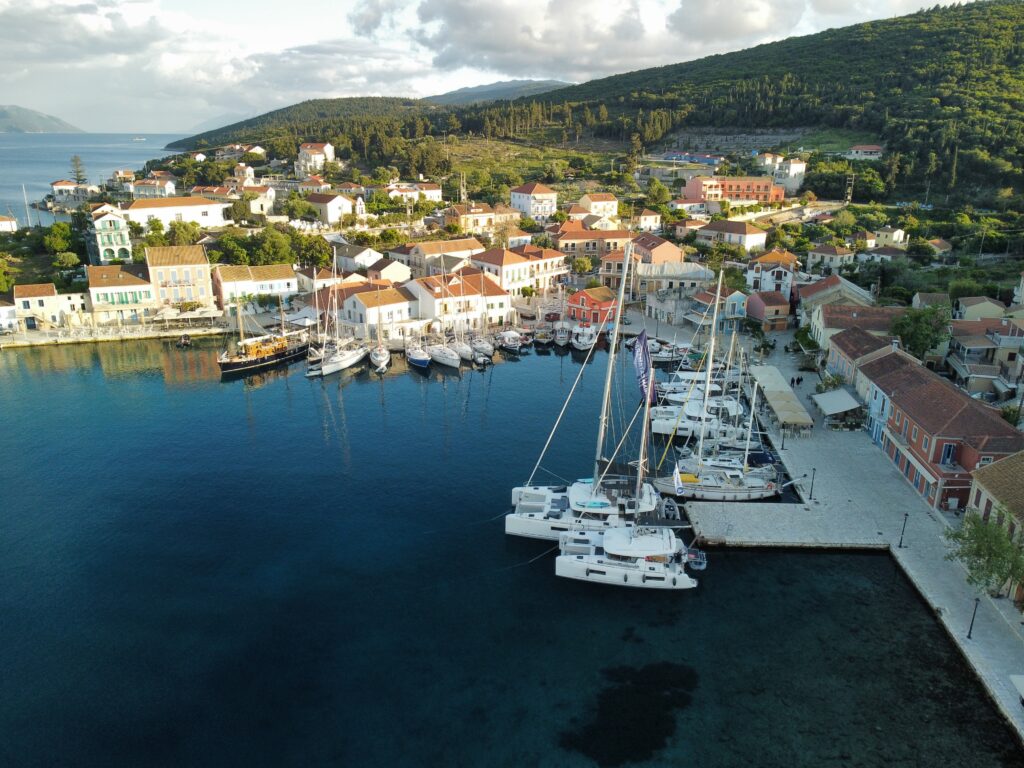
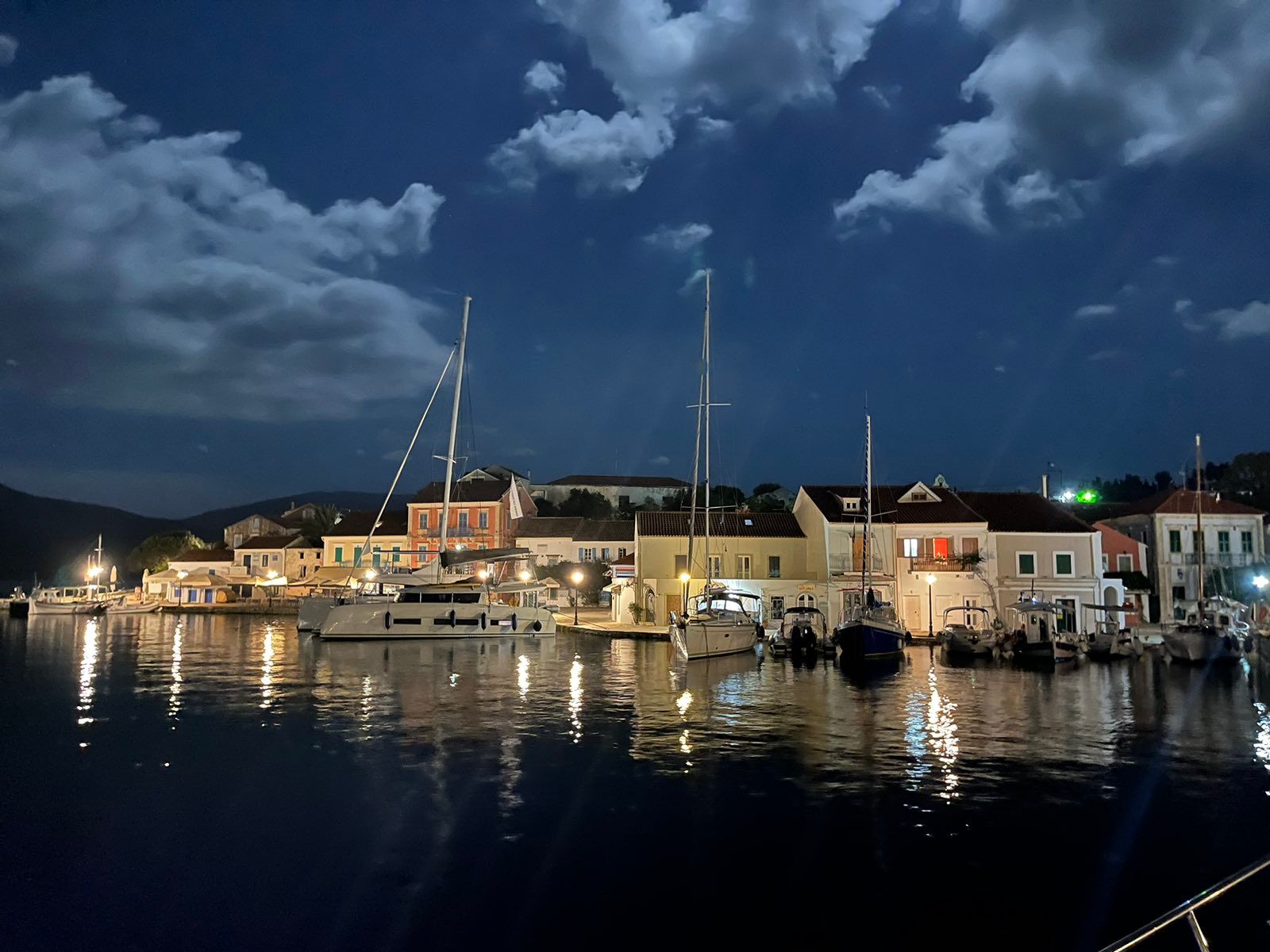
The difference matters because not every overnight stop should be approached the same way. In a managed marina, staff may assign your berth and help with laid mooring lines. At a traditional town quay, Mediterranean mooring may instead mean dropping your own anchor and reversing towards the quay. Our guide to Greek sailing culture covers the wider procedure; for etiquette, the rule is to observe, ask and confirm rather than assume.
| Managed marina | Town quay | |
| Berth | Often allocated | Depends on local arrangements |
| Mooring | Often laid lines | May involve your own anchor |
| Staff assistance | Common | May be limited |
| Water and electricity | Often available | Varies |
| Commercial traffic | Usually separated | May share the waterfront |
| Rules and payment | Formal marina procedures | Confirm locally |
An empty quay does not automatically mean an available berth. Ferries, excursion boats and fishing vessels may need that space later, and they tend to be bigger than you.
> Read More: How to Pick the Right Marina in the Ionian
Do This Before Entering an Ionian Marina
- Contact the marina,
- Confirm your berth, and
- Have the boat ready before you begin the final approach.
D-Marin Gouvia and D-Marin Lefkas currently publish VHF Channel 69 as their arrival channel. That does not make Channel 69 the answer for every Greek marina, so check the current information for each destination.
When you call, have the yacht’s name, length, and beam ready, and say clearly that you are sailing a catamaran. Beam decides which berth suits you. Before manoeuvring, make sure everyone aboard knows their role: fenders out, stern lines ready, and a clear decision on whether the bow will be secured with the yacht’s anchor or a marina laid line. Other boats waiting is not a reason to rush. A calm, prepared approach is better etiquette and better seamanship.
How Should a Catamaran Berth Without Inconveniencing Other Yachts?
Use only the space you have been assigned, prepare before you manoeuvre, and give neighbouring yachts room to manoeuvre themselves.
A catamaran’s beam often matters more than its length when it comes to berth planning, so awareness of the space either side is essential. Position fenders properly, keep lines controlled and clear of propellers, and think about safe access between boat and shore before the manoeuvre is finished.
If an approach is not working, reset and try again rather than forcing the boat into place. If another yacht is manoeuvring nearby, give it space, and do not grab someone else’s lines or fenders unless asked. If marina staff’s instructions are unclear, ask them to repeat them. Good marina behaviour is less about a perfect manoeuvre and more about being predictable and communicating clearly.
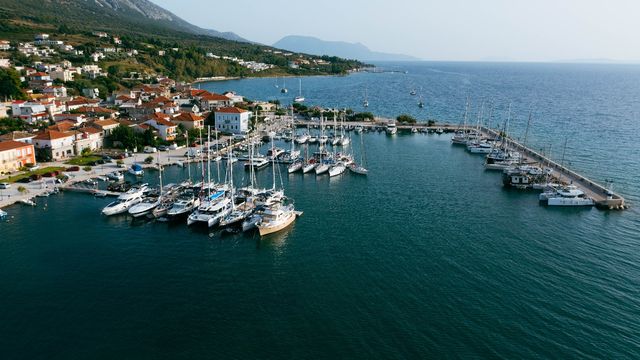

What Should You Do If Anchors or Mooring Lines Cross?
Communicate first. Do not simply pull harder.
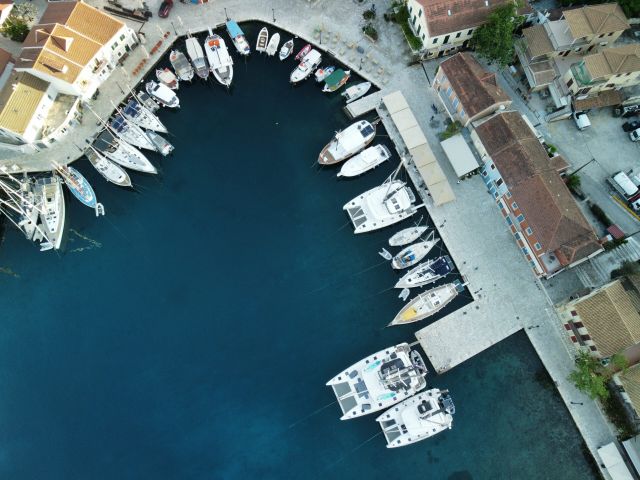
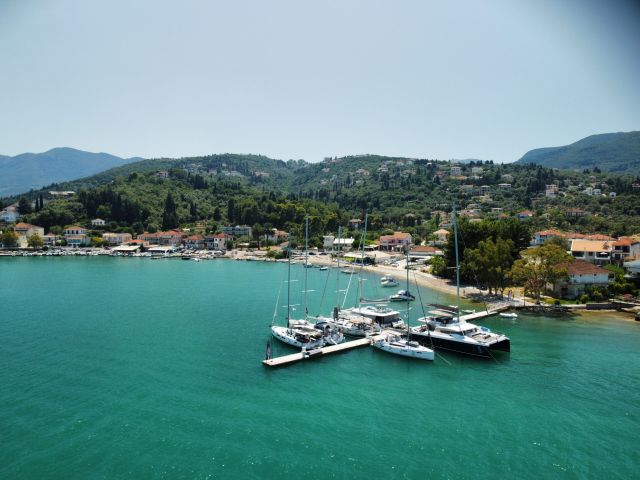
Crossed anchors can happen with Mediterranean-style mooring, particularly where several yachts have laid anchors from the same quay. If you suspect your anchor or chain has crossed another yacht’s, tell the other crew and, where available, the harbour or marina staff.
Agree a solution together rather than moving, releasing or altering another yacht’s lines without permission. Immediate safety situations are the obvious exception. Above all, resist turning it into a debate about whose anchor started it. No reliable figures exist on how often anchors cross in the Ionian, so treat claims that it happens “all the time” with caution. It is, however, likely enough to be worth knowing the etiquette.
Quiet Hours in Greek Marinas Explained
Greece has official seasonal quiet hours, and they apply well beyond marina courtesy.
| Season | Dates | Afternoon | Overnight |
| Summer | 1 April–30 September | 15:00–17:30 | 23:00–07:00 |
| Winter | 1 October–31 March | 15:30–17:30 | 22:00–07:30 |
The schedule changes on 1 October, which is worth remembering if your Ionian charter stretches into the autumn. In practice, keep cockpit music, shouting and unnecessary noise under control. Loose equipment knocking against the deck all night will not make you popular with the boat next door either.
Quiet hours and marina regulations are not the same thing, though. D-Marin Gouvia and D-Marin Lefkas both prohibit generator use, and that does not become acceptable when quiet hours end. Marina-specific rules always apply.
How Should You Share Water, Electricity and Quay Space?
Treat marina utilities and walkways as shared infrastructure, not an extension of your boat.
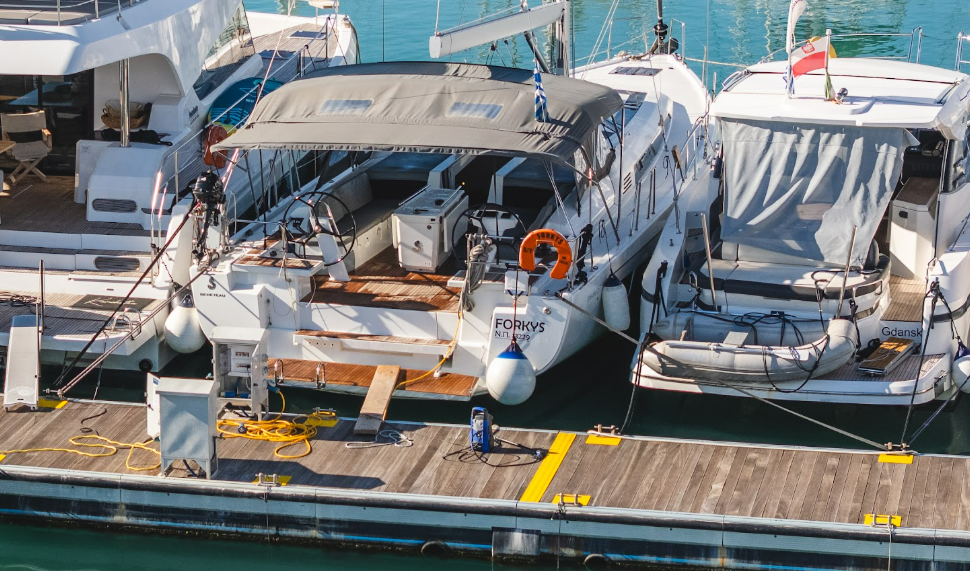
Confirm which pedestal and connection belong to your berth before connecting shore power or water. Never disconnect another yacht, or use someone else’s hose or cable, without asking. Once connected, route cables and hoses so they do not create obstacles across the dock. Bags, shoes, water toys and other equipment should stay out of pedestrian routes.
Gouvia and Lefkas both require docks to be kept free of loose items, while their facilities provide water and electricity to visiting yachts. The same principle applies to water: use what you need, and do not leave taps running.
Can You Swim Inside Ionian Marinas?
Do not assume you can. At D-Marin Gouvia and D-Marin Lefkas, recreational swimming, diving, fishing, and sports inside the marina are prohibited. The Ionian is full of far better places to swim, and you will be anchored in one of them soon enough.
Both marinas also prohibit waste discharge into marina waters. Use the designated waste and recycling facilities, and ask marina staff about holding-tank services rather than assuming every harbour offers the same.
There are specific rules for families and pets too: children under 14 must be supervised, and dogs and other animals must be kept under control and on a leash. These are rules for Gouvia and Lefkas, not proof that every marina or town harbour in Greece works the same way. Always check the rules at your particular stop.
What Should You Check Before Leaving an Ionian Harbour?
A considerate departure begins before the engine goes into gear. Before you leave, check these 7 steps:
- Settle any applicable marina or harbour charges.
- Confirm departure instructions where necessary.
- Disconnect and recover shore-power cables and water hoses.
- Keep lines and equipment clear of neighbouring boats.
- Coordinate with neighbours if anchors, chains or mooring lines may interact.
- Check for ferries, excursion boats and other commercial traffic.
- Leave the berth and shared dock area clear.
Places such as Fiskardo show why local awareness matters: an apparently empty stretch of waterfront may be used by commercial vessels rather than visiting yachts. Confirm availability locally rather than inferring it from how empty the quay looks.
Ask the Ionian Catamarans team for any help before your sailing holiday
Questions about marina etiquette are best answered before you arrive at the marina.
The Ionian Catamarans team is happy to help with anything related to it, whether that’s what to expect at your first berth, how arrival procedures work at our bases in Lefkas, Corfu and Palairos, or what to tell the marina when you call ahead in a catamaran. If you’re unsure about a rule, a VHF channel or whether that empty bit of quay is really empty, ask us.
We’d much rather answer a question now than watch you work it out in front of an audience of neighbouring yachts.
> Read More: 3 Bases, 1 Standard: How Ionian Catamarans run charter operations for +25 years
Final Thoughts
Good marina etiquette in the Ionian is not complicated. Prepare before you arrive, communicate clearly, respect the space around your catamaran, and never assume that one marina’s procedures apply everywhere else. These habits make life easier for your crew, your neighbours, the harbour staff and the communities behind busy Ionian waterfronts.
For a broader understanding of Mediterranean mooring, harbour procedures and local sailing practice, continue with our ultimate guide to Greek sailing culture.
Planning your own Ionian sailing holiday? Ionian Catamarans has more than 25 years of charter experience in the region, with bases in Lefkas, Corfu and Palairos. Our team can help you choose the right catamaran and plan a route that suits your crew and the Ionian experience you are after.
FAQ: Marina Etiquette in the Ionian
Can you run a generator in Greek marinas?
There is no single answer for every Greek marina. D-Marin Gouvia and D-Marin Lefkas explicitly prohibit generator use, regardless of whether national quiet hours are in effect. Check the regulations of each marina before using one.
What are the quiet hours in Greek marinas?
From 1 April to 30 September, afternoon quiet hours are 15:00–17:30 and overnight hours are 23:00–07:00. From 1 October to 31 March, they are 15:30–17:30 and 22:00–07:30.
Can you swim inside Gouvia or Lefkas Marina?
No. Both marinas currently prohibit recreational swimming, diving, fishing, and sports within the marina.
Which VHF channel do Gouvia and Lefkas use?
Both currently publish VHF Channel 69 for arrivals. Do not assume this applies to other Ionian or Greek marinas; check the published information for each destination.