What Defines Greek Sailing Culture?
Greek sailing culture combines seamanship, harbour procedures, local regulation, radio discipline, and social etiquette. Whether you’re a first-time sailor, on a bareboat charter handling the boat yourself, or sailing with a professional skipper aboard, understanding Mediterranean mooring, quay etiquette, Port Authority procedures, VHF basics, and everyday harbour customs is what turns a stressful arrival into a routine one.
The 5 practical pillars every charter sailor should know:
- Mediterranean mooring: Stern-to docking, anchors, lazy lines, and shore lines.
- Marina and quay etiquette: Fenders, noise, lines, neighbours, and harbour staff.
- Harbour procedures and documentation: Vessel papers, applicable fees, check-in, and clearance.
- VHF communication: Correct channels, concise radio calls, and official communication.
- Greek maritime customs: Courtesy flags, greetings, quiet hours, dress, and local hospitality.
In simple terms: good sailing culture in Greece = confident boat handling + correct procedures + respect for the harbour and the community around you.
Greek Sailing Culture at a Glance
The technical and cultural sides of sailing in Greece are closely connected. The table below summarises what matters most for anyone chartering a yacht in Greek waters, whether you’re at the helm yourself or along for the ride.
| Area | What Charter Sailors Need to Know | Why It Matters |
|---|---|---|
| Mediterranean mooring | Stern-to, anchors, lazy lines | Core harbour skill |
| Marina etiquette | Fenders, noise, neighbours | Reduces conflicts and damage |
| Harbour procedures | Documents, fees, clearance | Prevents delays and compliance issues |
| VHF communication | Correct channels and concise calls | Improves safety and coordination |
| Local customs | Flags, greetings, quiet hours | Shows respect and local awareness |
Understanding these practices before your first charter day makes Greek sailing far easier than trying to absorb them during a crowded harbour arrival, with an audience.
Why Sailing in Greece Feels Different
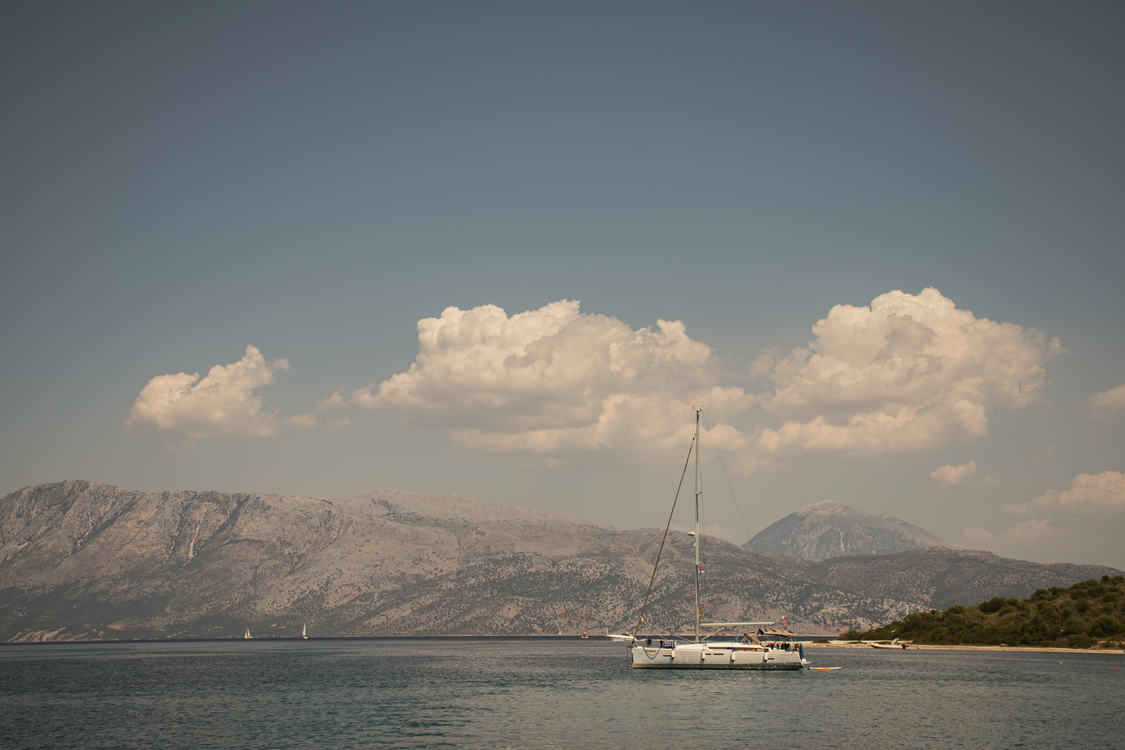
Greece has a sailing culture shaped by 1000 of islands and small harbours, traditional town quays, modern marinas, exposed Aegean sailing grounds, and calmer cruising areas such as the Ionian.
The result is a system where a charter sailor constantly moves between technical seamanship and local practice. You may spend the afternoon on a crosswind stern-to approach and the evening sharing a quay with fishing boats, other charter yachts, residents, and a taverna crowd that has, unofficially, appointed itself harbour jury. The next morning, a local procedure may need checking, a Port Authority channel may need monitoring, or the route may need adjusting because the next harbour simply does things differently.
This applies whether you’re on a bareboat charter doing the mooring yourself or on a skippered charter where a professional handles the technical side. Either way, being a good sailor in Greece is as much about observation and adaptability as it is about boat handling. The technique gets you to the quay. The judgement gets you invited back.
1. Mediterranean Mooring: The Greek Harbour Standard
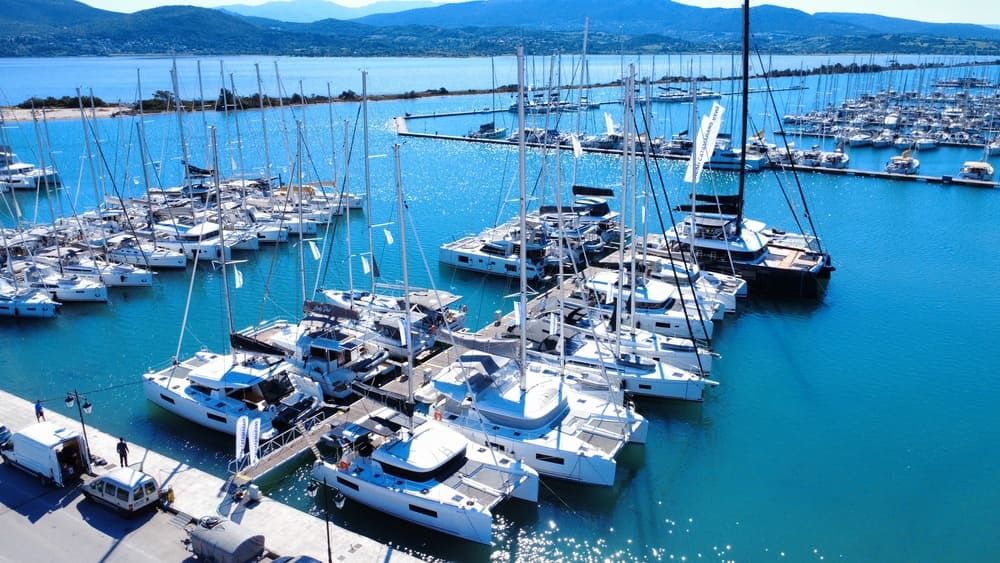
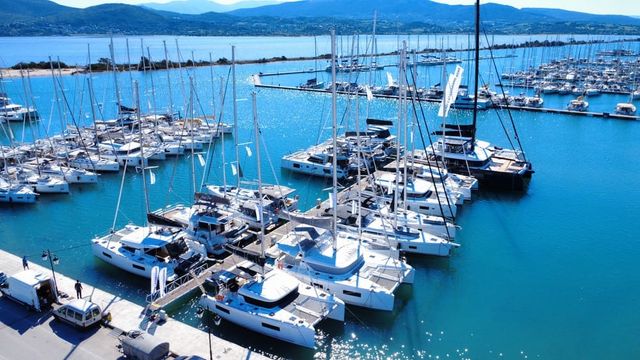
Mediterranean mooring is central to everyday harbour life in Greece. Instead of berthing alongside and occupying a long section of quay, yachts usually berth stern-to or bow-to, allowing many more vessels to share limited waterfront space.
For charter sailors, this is one of the most important local practices to understand, since it determines how the crew prepares for arrival, how lines and anchors are handled, and how neighbouring boats interact within a confined harbour.

Why Stern-To Mooring Dominates
Greek island harbours often have limited quay space, so stern-to mooring dramatically increases capacity.
It also creates practical access ashore. Once secured, the yacht’s stern sits close to the quay, letting guests step directly into town. Convenient for guests; slightly less convenient for whoever’s at the helm, who now has an audience for every reversing manoeuvre.
This arrangement is efficient, but it means every charter sailor needs to understand how anchor, stern lines, fenders, and neighbouring yachts interact — ideally before committing to the approach, not during it.
Anchor-Style Mediterranean Mooring
In traditional town harbours without laid mooring lines, the yacht typically uses its own anchor to secure the bow while stern lines hold the boat toward the quay. A typical sequence:
- Inspect wind direction, berth width, neighbouring yachts, and likely anchor positions.
- Prepare fenders and stern lines before the final approach.
- Position the yacht several boat lengths from the quay.
- Drop the anchor with sufficient distance and scope.
- Reverse steadily toward the berth while paying out chain.
- Secure the windward stern line first if crosswind is significant.
- Secure the second stern line and adjust chain tension.
- Leave enough distance between the stern and the quay to prevent contact.
The exact chain scope depends on depth, holding ground, available harbour space, and surrounding anchors. As a practical starting reference, roughly four times the depth is commonly used in harbour conditions — but this is a starting point for judgement, not a substitute for it.
Lazy Lines in Organised Marinas
Modern Greek marinas often use lazy lines, so the yacht does not need to deploy its own anchor. The yacht reverses into the berth and secures the stern lines first. A lighter pickup line is then retrieved from the quay and walked forward to the bow, where it connects to the heavier permanent mooring line on the seabed.
The main operational risk is the propeller. A lazy line should never be allowed to drift near an engaged propeller. If its position is uncertain, selecting neutral until the crew confirms it is clear is far safer than trying to fix things with more throttle — a lesson usually learned once and remembered permanently.
Crosswinds, Meltemi, and the Abort Decision
A routine Mediterranean mooring manoeuvre becomes considerably more demanding when a strong crosswind blows across the quay — particularly in exposed parts of the Aegean during Meltemi wind season.
> Read More: The Ultimate Guide to Ionian Sailing Weather: What to Expect, Season by Season
The skipper may need to modify the approach angle, compensate earlier for lateral drift, and prioritise the windward stern line.
The most important rule, however, is not technical: if the approach no longer feels controlled, abort and reset.
Leaving the berth and trying again is normal seamanship. Continuing a failed approach because people are watching from the quay is how minor mistakes become expensive, well-witnessed ones.
Shore Lines in Anchorages
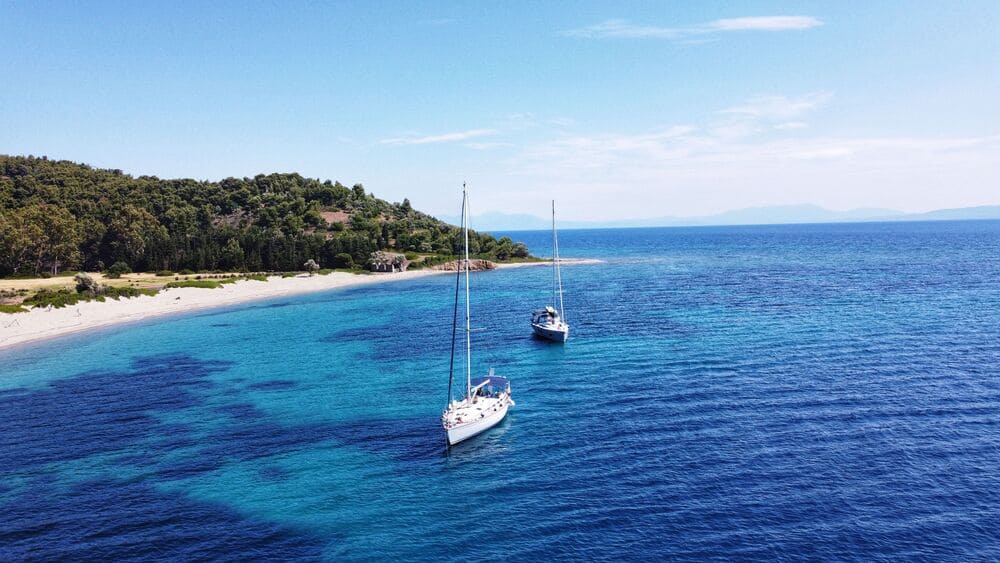
Some Greek anchorages allow yachts to anchor from the bow and run stern lines ashore, restricting swing and fitting safely into a narrow bay. Depending on location and local rules, a crew member may take the line ashore by dinghy, paddleboard, or swimming.
Lines should be attached only to appropriate securing points, never to trees or protected vegetation.
This technique deserves its own detailed guide, since shore-line handling, anchor geometry, crew roles, and recovery procedures vary significantly between monohulls and catamarans.
> Read More: Hidden Anchorages in the Ionian Sea
2. Marina and Quay Etiquette: How Charter Sailors Are Judged
Once the yacht is secured, seamanship doesn’t stop — it just changes shape. Greek marinas and town quays are shared spaces. Charter yachts may be moored metres from private vessels, fishing boats, restaurants, homes, and pedestrians. How you and your crew behave in that space affects both safety and how warmly you’re received.
Good marina etiquette isn’t about formality. It’s about making a crowded environment work without anyone needing to raise their voice.
Prepare Fenders Before the Final Approach
Fenders should be rigged before the yacht begins its final manoeuvre, positioned at the correct height for the quay, and adjusted for any neighbouring boats close enough to make contact possible.
Keep Lines Controlled and Out of the Water
Loose ropes around a marina turn dangerous quickly. Lines dragging near the stern can foul propellers, while poorly positioned shore lines can obstruct neighbouring boats or people on the quay. Lazy lines deserve particular care — heavy, wet, and easy to lose sight of.
Respect Quiet Hours and Siesta
Seasonal summer quiet hours run roughly 15:00–17:30 and 23:00–07:00. Local implementation should always be checked, but the principle is simple: small Greek harbours are not floating party venues twenty-four hours a day, however convincing the sunset argues otherwise.
Loud music, shouting, and unnecessary generator noise during quiet periods create avoidable conflict with residents and neighbouring yachts.
Respect Your Neighbours
Popular Greek harbours can become extremely busy during summer. Don’t claim more quay space than your yacht requires, and don’t treat nearby boats as obstacles that should move for your convenience. If another yacht is manoeuvring, give the skipper space and time. The same courtesy applies at anchor: consider swinging room, shore lines, and access for others.
Work With Harbour Staff
Marineros and harbour staff understand local wind effects, underwater mooring systems, ferry schedules, and berth assignments that aren’t obvious from the cockpit. If an instruction seems inconvenient, listen before challenging it. A calm interaction and a simple efharisto usually make the entire process easier.
Respect the Yacht as a Working Space
Many professionally operated yachts follow a barefoot or non-marking-shoe policy. Even on casual charters, decks should stay clear enough for safe movement, belongings should be secured, and wet gear managed properly. The yacht is your accommodation, but it remains an operating vessel — not a beach towel with a mast.
Protect Posidonia and Sensitive Seabeds
Environmental awareness matters increasingly throughout Mediterranean sailing. Posidonia oceanica seagrass is ecologically valuable and vulnerable to anchor damage. Where restrictions, designated moorings, or mooring fields exist, follow them. Where anchoring is permitted, look for sand rather than dropping onto visible seagrass.
Greek Marina Etiquette: Do vs Avoid
| Do | Avoid |
|---|---|
| Prepare fenders early | Waiting until the final approach |
| Keep lines organised | Leaving ropes near propellers |
| Respect quiet hours | Loud music during siesta |
| Give neighbours space | Treating the quay territorially |
| Follow harbour staff instructions | Ignoring local guidance |
| Anchor responsibly | Dropping onto protected seagrass |
3. Harbourmaster Procedures and Legal Requirements
Paperwork is not the memorable part of a Greek sailing holiday, but missing or incorrect documentation has a way of becoming the most memorable part, for entirely the wrong reasons.
Requirements depend on vessel ownership, flag, charter status, point of entry, and whether the yacht is arriving from within or outside the relevant customs and immigration area.
Professional charter guests will normally find much of the vessel-level administration already handled by the charter company. Private yacht owners and international arrivals may carry additional obligations.
Documents Charter Sailors Should Have Ready
Before sailing, keep all relevant papers together rather than distributed across bags and lockers. A practical document set may include:
- Vessel registration
- Insurance documents
- Skipper licence or qualifications
- Passports
- Crew information
- Applicable vessel fee documentation
- Clearance or transit papers where required
The exact list depends on the yacht and voyage.
DEKPA and Other Cruising Documentation
DEKPA and related cruising documentation apply to certain vessels. Greek administrative requirements have changed over time, and not every vessel or charter situation is treated identically, so charter sailors should not rely on older online guides without checking whether the information remains current for their vessel type, flag, and itinerary.
Charter Check-In and Clearance
The start of a charter includes more than receiving the keys. Allow time for:
- Crew documentation
- Contract and vessel paperwork
- Yacht handover
- Safety briefing
- Equipment checks
- Any local endorsement or harbour procedures
Recent standardisation of harbourmaster endorsement procedures at embarkation ports means extra clearance time is worth allowing at the beginning of some charters. For international guests, that’s also a good reason not to plan an ambitious passage for day one.
Leaving Greece for Turkey or Another Non-EU Destination
International sailing adds an administrative layer. When leaving Greek waters for sailing in Turkey, appropriate clearance, vessel documents, port fees, and departure procedures may be required before the crossing. Cross-border sailing should be planned as an international movement, not simply another island hop.
4. VHF Communication in Greek Waters
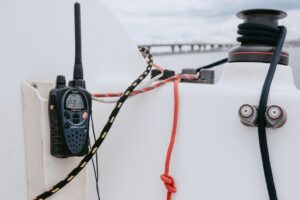
VHF radio remains part of competent sailing in Greece even where mobile coverage is excellent. It’s used for official communication, navigational safety, emergencies, and coordination with Port Authorities or marinas where local procedure requires radio contact.
The key isn’t speaking frequently. It’s knowing when, where, and how.
Greek VHF Channels at a Glance
Local assignments can change, so treat the table below as a planning reference rather than a substitute for current official information.
| Channel | Typical Purpose |
|---|---|
| 16 | Distress, urgency, safety, initial calling |
| 12 | Port Authority communication where designated |
| 7 | Coast Guard-related use in listed areas |
| 11 | Corinth Canal |
| 18 | Listed regional use, including parts of the Ionian |
| 19 | Area-dependent regional use |
| 21 | Saronic / Corinth Gulf regional use |
| Inter-ship channels | Routine yacht-to-yacht communication |
Confirm the correct local working channel with your charter base, current pilot information, marina, or Port Authority before departure.
How to Make a Clear Radio Call while Sailing in Greece?
A useful radio call answers three questions: Who are you? State the vessel name. Where are you? Give your position or approach location. What do you need? State your intention or request.
When approaching a marina, useful information includes your yacht name, ETA, vessel length, and a request for berth instructions. Keep the initial transmission short and switch channels if instructed.
Do Not Use Channel 16 for Casual Conversation
Channel 16 serves a safety function. Routine yacht-to-yacht chat should move to an appropriate working channel. Good radio discipline is a small but visible sign of professional seamanship — and a quiet favour to everyone else trying to hear an actual emergency call.
If You Do Not Understand an Instruction
Ask for clarification. Repeat the important part of the instruction back and confirm before manoeuvring. Pretending to understand a radio call is considerably less competent than simply asking for it again.
Emergency Numbers
| Service | Number |
|---|---|
| General emergency | 112 |
| Coast Guard | 108 |
| Police | 100 |
| Fire | 199 |
| Ambulance | 166 |
VHF should still be treated as the primary marine communication tool where appropriate.
5. Courtesy Flags, Greetings, and Greek Maritime Customs
Technical competence gets a yacht safely into harbour. Cultural awareness determines how smoothly the experience continues once you arrive.
Small gestures — flying the correct courtesy flag, greeting harbour staff, respecting quiet hours, dressing appropriately ashore — show that you understand you’re visiting a community, not just consuming a destination.
Fly the Greek Courtesy Flag Correctly
Visiting yachts should follow appropriate courtesy flag conventions in Greek territorial waters. The Greek courtesy flag is generally flown from the recognised courtesy position, commonly beneath the starboard spreader on suitable rigs, while the national ensign stays in its proper position.

When arriving from Turkey or another country requiring formal entry, additional customs flag procedures may apply. Confirm the correct flag configuration for your specific voyage.
Learn a Few Greek Phrases
You don’t need to speak Greek, but a few words improve everyday interactions.
| Greek | Meaning |
|---|---|
| Kalimera | Good morning |
| Yia sas | Hello |
| Efharisto | Thank you |
| Parakalo | Please / You’re welcome |
Perfect pronunciation is not required. Effort is noticed.
Understand Philoxenia, the renowned Greek hospitality
Philoxenia is commonly described as Greek hospitality, or the “love of strangers.” For visiting sailors, it’s best understood as reciprocal: guests are welcomed, and guests are expected to behave respectfully in return. Patience, sincerity, and basic courtesy usually achieve more than trying to force a situation.
Understand Siga-Siga
Siga-siga means “slowly, slowly.” It doesn’t mean ignoring schedules or becoming careless. It means recognising that small delays are part of island life, and that escalating minor frustrations rarely improves the outcome. For charter sailors dealing with local harbour operations, this mindset is surprisingly useful — and considerably cheaper than the alternative.
Dress Appropriately Ashore
Swimwear belongs naturally on the boat and beach. When entering villages, shops, restaurants, churches, or monasteries, adapt to the setting. Sacred sites may require shoulders and knees covered, quieter behaviour, and respect for photography rules.
Understand Tipping Culture
Roughly 10–15% of the base charter fee is a commonly referenced gratuity benchmark for crewed charters, typically given to the captain for distribution among the crew. Treat this as guidance rather than an automatic charge. Restaurant tipping practices also vary depending on whether service is already included.
Minimum Greek Phrasebook for Charter Sailors
| Phrase | Use |
|---|---|
| Kalimera | Morning greeting |
| Yia sas | Polite hello |
| Efharisto | Thank you |
| Parakalo | Please / You’re welcome |
| Signomi | Excuse me / Sorry |
| Nai | Yes |
| Ochi | No |
7 Common Mistakes Charter Sailors Make in Greece
Many problems in Greek waters come from small operational decisions rather than major sailing failures. Knowing the recurring mistakes helps crews avoid them before they create unnecessary stress.
- Dropping the anchor too close to the quay — insufficient scope increases the chance of dragging. Assess depth, space, and neighbouring anchors before committing.
- Trying to save a failed mooring approach — if it’s no longer controlled, leave and reset. A second attempt is safer than forcing a bad first one.
- Allowing a lazy line near the propeller — the moment it’s hard to locate, use neutral until it’s confirmed clear.
- Using Channel 16 for routine conversation — keep it for safety and calling, and move chat to a working channel.
- Arriving without current documentation — don’t assume last season’s paperwork still applies. Check before departure.
- Ignoring quiet hours — a Greek town quay is part of the local community, not a soundstage.
- Treating a town quay like a private marina — facilities, staffing, and mooring arrangements vary. Observe first, ask when uncertain.
Real-World Greek Harbour Scenarios
The interaction between seamanship and local culture becomes clearer in real situations. These examples show how small decisions determine whether an arrival stays routine or turns into a story told at the next marina bar.
Scenario 1: Crosswind Mediterranean Mooring
A skipper begins reversing into a berth while a strong crosswind pushes the bow away. Instead of increasing throttle and trying to rescue the manoeuvre, the skipper aborts, circles back, adjusts the approach angle, and briefs the crew again. The second approach succeeds, because the problem was recognised early rather than fought to the end.
Scenario 2: Lazy Line Near the Propeller
The stern lines are secured, and a crew member begins retrieving the lazy line. The skipper briefly loses sight of the line near the stern and immediately selects neutral. Once the crew confirms it’s safely forward, the manoeuvre continues. The correct outcome, satisfyingly, is that nothing happens.
Scenario 3: Afternoon Quiet Hours
A charter crew arrives in a small harbour and turns the music up during the afternoon. A local resident asks them to reduce the volume. The skipper apologises and adjusts the onboard routine rather than arguing about being on holiday. The waterfront becomes lively again that evening anyway — understanding the local rhythm prevents a pointless conflict, not a good time.
Charter Sailor’s Checklist Before Sailing in Greece
Preparation eliminates much of the uncertainty visiting charter sailors experience during their first Greek charter. If you’re on a skippered charter, your captain will handle most of the technical items below — but it’s still worth knowing what’s happening and why. Use this as a starting point and adapt it to your yacht and itinerary.
Before Your First Greek Harbour Entry
- Check registration and insurance documents
- Confirm skipper qualification requirements
- Organise passports and crew information
- Confirm applicable TEPAI or vessel obligations
- Check current clearance requirements
- Carry the Greek courtesy flag
- Save relevant VHF and emergency information
- Check local harbour procedures
Before Mediterranean Mooring
- Rig fenders
- Prepare stern lines
- Brief crew roles
- Check wind direction
- Understand chain markings
- Identify neighbouring anchors
- Keep an abort route available
- Keep lines clear of propellers
Daily Harbour Routine
- Check local weather
- Confirm harbour or marina procedure
- Listen to relevant VHF channels
- Secure fenders and lines
- Check water and shore-power rules
- Respect local quiet periods
- Keep the quay clear
- Follow environmental restrictions
Final Thoughts: Good Seamanship Is Also Good Etiquette
Greek sailing culture is not a collection of arbitrary rules. Most local practices exist because they make crowded harbours safer, reduce conflict, and help yachts coexist with the towns and communities around them.
Preparing fenders early protects another boat. Using the radio correctly keeps safety channels useful. Respecting quiet hours recognises that the harbour is also somebody’s home. Flying the courtesy flag shows that entering another country’s waters deserves a little consideration — and a spare halyard.
Experienced sailors don’t need to relearn how to sail before chartering in Greece. They need to adapt what they already know to the local system.
Understand Mediterranean mooring, prepare the paperwork, communicate clearly, observe the quay before acting, and respect the rhythm of Greek island life.
That’s the difference between simply chartering a yacht in Greece and sailing Greece like someone who understands where they are.
Frequently Asked Questions About Greek Sailing Culture
Is Mediterranean mooring standard in Greece?
Yes. Stern-to and bow-to Mediterranean-style mooring is common throughout Greek ports and marinas. The exact system varies between own-anchor setups, lazy lines, and other local arrangements.
Do all Greek marinas use lazy lines?
No. Modern organised marinas often use them, while traditional town quays may require yachts to use their own anchor.
Which VHF channel should I use in Greek ports?
It depends on the area and authority. Channel 16 remains the principal distress, safety, and initial calling channel, while Port Authorities and regional services use designated working channels. Confirm the current local channel before arrival.
Do charter guests handle Greek vessel paperwork themselves?
On professionally operated Greek charters, much of the vessel-level administration is normally handled by the operator. Private yacht owners and international arrivals may carry additional responsibilities.
Should I fly a Greek courtesy flag?
Visiting yachts should follow appropriate maritime courtesy flag conventions in Greek waters. Confirm the correct position and any additional entry flag requirements before arrival.
Is sailing culture different in the Ionian and Aegean?
The fundamental harbour customs are similar, but sailing conditions and harbour manoeuvres can differ significantly. The Ionian is generally more sheltered, while parts of the Aegean can experience stronger Meltemi winds that influence routing and mooring strategy.
What is the most important Mediterranean mooring rule?
Don’t force a bad approach. Prepare the crew, understand the wind, maintain an escape route, and reset if the manoeuvre stops being controlled.