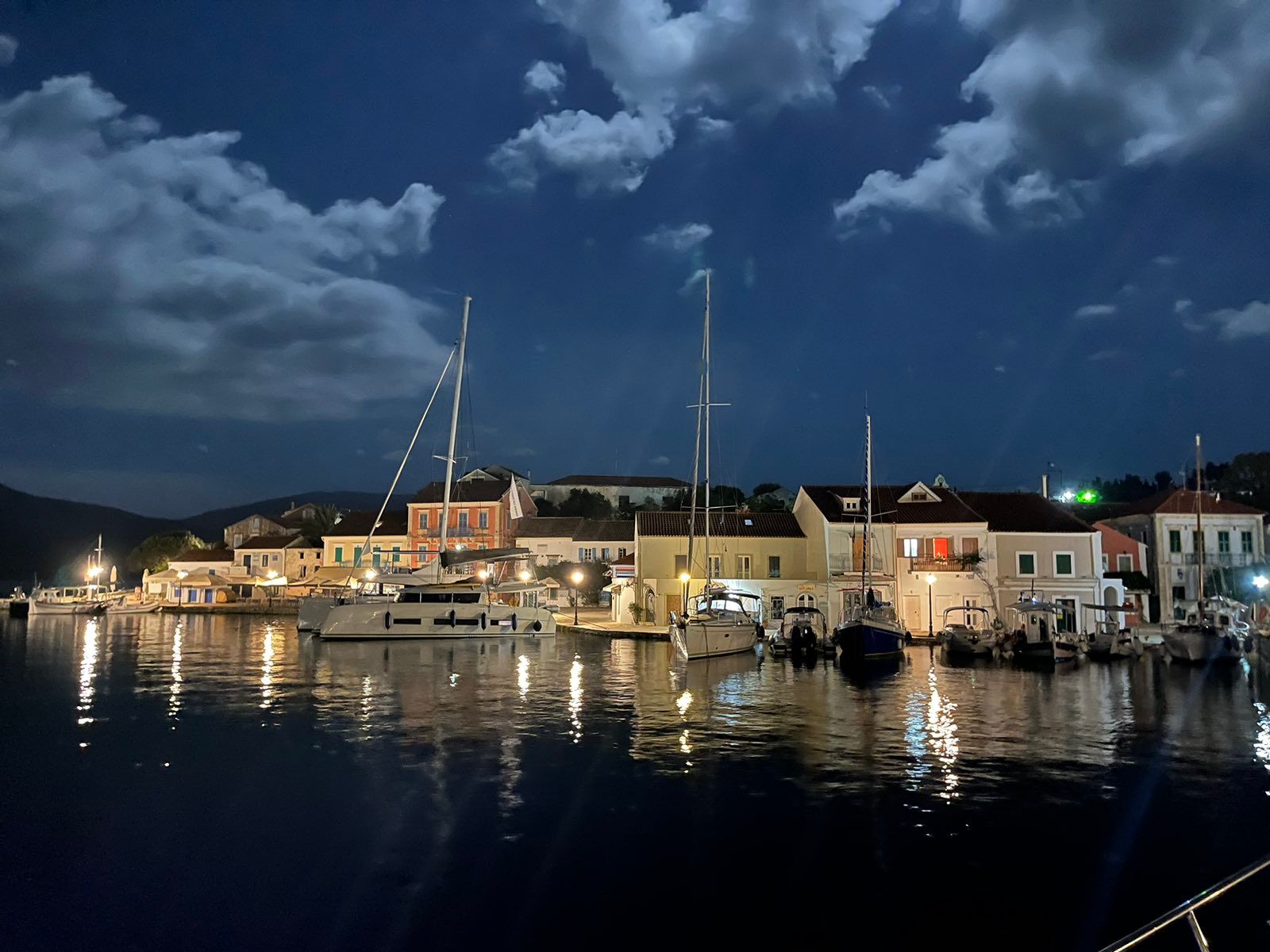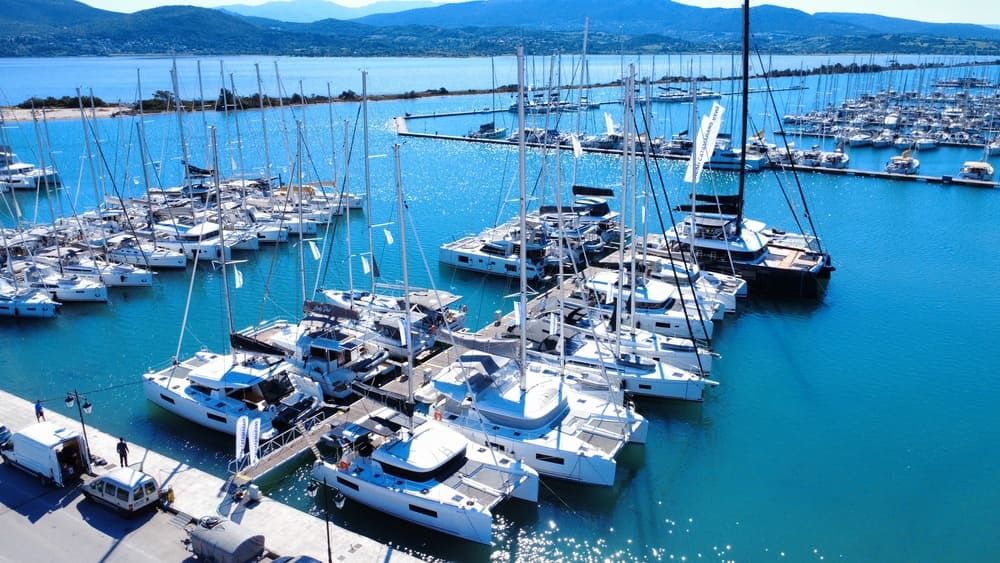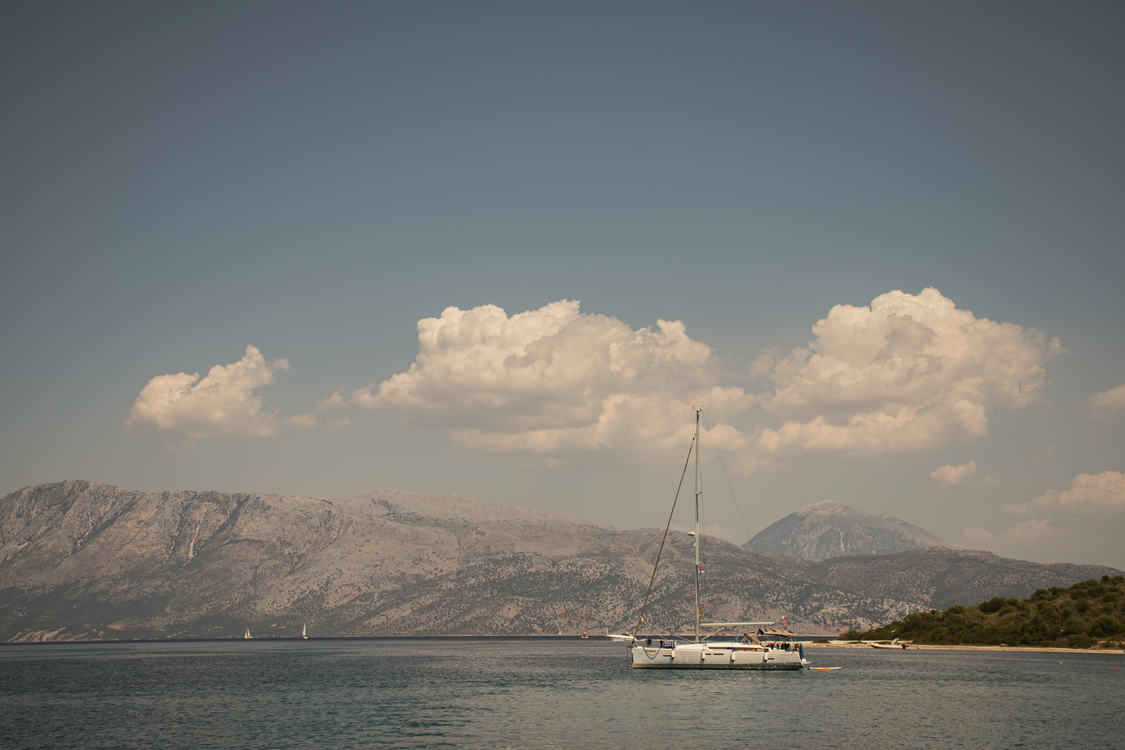

Beyond comfort, what makes the Ionian truly stand out is how cooperative it feels under sail. Winds build when you expect them to, ease when you need them to, and rarely escalate into something that requires heroic decision-making. Instead of battling the elements, you work with them. Passages are steady, manageable, and often genuinely enjoyable, even for those who are still learning which rope does what.
This article expands the narrative of our Ultimate Guide to Ionian Sailing Weather and provides a comprehensive overview of Ionian sailing weather, designed to help long-haul travellers and first-time sailors set realistic expectations and plan the perfect trip without requiring a degree in meteorology.
3 key factors make the Ionian weather’s stability:
- Dominance of localized thermal wind systems (Maistros)
- Geography that interrupts wind acceleration and limits fetch
- Stable Mediterranean high-pressure systems during peak season
The result is wind that behaves consistently, follows repeatable daily patterns, and rarely produces prolonged disruption.
Predictable vs Calm: An Important Distinction for Sailors
The Ionian Sea is one of the most reliably predictable sailing destinations in the Mediterranean. Its weather consistency comes from three interlocking factors: a daily thermal breeze called the Maistros that cycles like clockwork from May to September, an island chain that physically shields the region from the stronger Aegean winds, and a summer-long Mediterranean high-pressure system that suppresses storm risk. The result is calm mornings, steady afternoon winds, and sheltered anchorages — conditions that suit both novice and experienced sailors.
In the Ionian, predictability means:
- Wind direction rarely shifts dramatically without warning
- Multi-day strong wind events are uncommon
- Afternoon breezes follow a consistent thermal cycle
- Sea state corresponds proportionally to wind strength
Sailors can anticipate the next 24–48 hours with confidence — and that reduces uncertainty more than low wind speeds alone.
Ionian’s Synoptic Winds vs Thermal Winds: What is Their Structural Difference?
In the Ionian, winds are primarily thermal. That means they are generated by daily heating cycles rather than large-scale continental pressure systems.
> Read More: A Guide to Ionian Winds: What to Expect and When
Large-scale synoptic wind systems, such as the Meltemi in the Aegean, are driven by continental pressure differences. These systems can persist for several days and regularly reach 25–35 knots.
Thermal wind systems, such as the Maistros in the Ionian, are localized and driven by temperature differences between land and sea. Maistros pattern:
- Morning: Light or calm
- Midday: Gradual increase
- Afternoon: Moderate peak (typically 12–18 knots)
- Evening: Rapid easing
This reset cycle reduces the likelihood of prolonged strong wind regimes. What this means in practical sailing terms is refreshingly simple: the Ionian allows you to sail properly. Not survival sailing, not reef-at-dawn-and-pray sailing, but balanced, comfortable passages where you can trim the sails, settle into a steady course, and enjoy the movement of the boat without constant corrections.
The Maistros fills in gradually, giving you time to hoist and adjust at a civilized pace, and it rarely arrives with the sort of aggressive enthusiasm that makes crews question their life choices. For many charter guests, especially those new to sailing, this is the difference between enduring a passage and genuinely loving it.
Why Multi-Day Wind Events Are Rare in the Ionian
The Ionian is not exposed to the same continental wind funnel that accelerates the Meltemi in the Aegean. One of the biggest advantages of the Ionian is the rarity of prolonged strong-wind systems. In contrast, in more exposed areas, a strong wind event can dominate for several consecutive days, limiting passages and sometimes forcing boats to remain in a marina or heavily sheltered bays.
For charter guests, especially those flying long-haul, fewer lost days equals higher holiday value.
Key structural differences:
- Western positioning reduces exposure to Balkan-Turkish pressure gradients
- The Pindus mountain range buffers wind acceleration
- The basin is more enclosed and island-dense
When winds increase, they are more likely to remain moderate and short-lived rather than persistent and escalating.
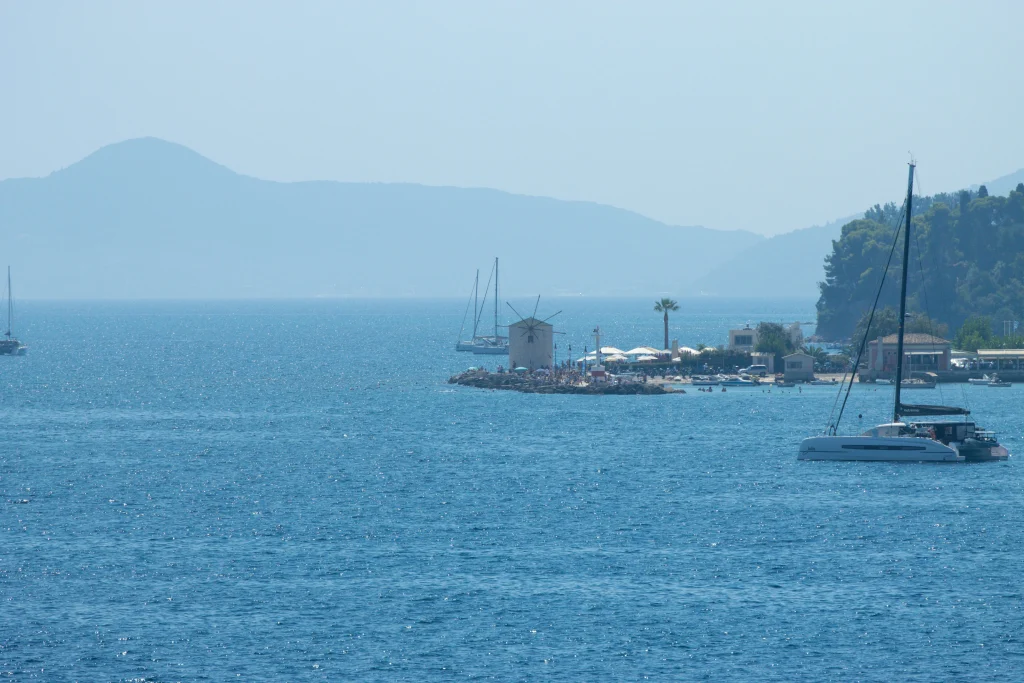
The Geography of Wind Dissipation
Fetch is the uninterrupted distance wind travels over water. The longer the fetch, the bigger the waves. Wave development depends on fetch — the uninterrupted distance over which wind travels across water.
The Ionian benefits from:
- Shorter east–west fetch distances
- Dense island corridors
- Numerous headlands break wind continuity
- Mainland proximity reduces exposure
Even when winds freshen, wave height remains comparatively moderate.
Statistical Reliability During Peak Season
Between June and September:
- The majority of days remain within Force 3–5 Beaufort (approx. 7–21 knots)
- Sustained Force 6+ conditions are infrequent
- Stable high-pressure systems dominate
The importance lies not in average wind speed but in the low frequency of extreme outliers.
> Read More: June vs September Weather in the Ionian
Forecast Accuracy in the Ionian
In more volatile regions, small pressure changes can escalate quickly, making forecasts less dependable over several days. Because Ionian winds are largely thermal and high-pressure driven:
- Forecast models perform reliably
- Wind direction errors are typically minor
- Sudden violent shifts are uncommon
This increases 48–72 hour planning confidence for sailors and makes passage planning straightforward, and reduces stress for less experienced crews.
Why Predictability Matters for Catamaran Charter Planning
Predictable weather reduces operational and emotional risk. For long-haul travellers, especially from Australia, this reliability is critical. And for charter guests, this means:
- Fewer lost sailing days
- Easier anchoring and docking
- Lower physical strain
- Greater itinerary flexibility
| FACTOR | IONIAN SEA | HIGH-EXPOSURE REGIONS |
| Dominant Wind Type | Thermal (Maistros) | Synoptic (e.g., Meltemi) |
| Multi-Day Strong Events | Rare | Common |
| Fetch Distance | Shorter | Longer |
| Wave Amplification | Moderate | Higher |
| Forecast Stability | High | Moderate |
Final Thoughts
Ionian weather predictability is not accidental. It is the outcome of thermal wind dominance, reduced continental wind funneling, mountain buffering, limited fetch, and stable summer pressure systems.
For sailors seeking manageable conditions and reliable planning windows, the Ionian offers one of the most structurally stable sailing environments in the Mediterranean.
Frequently Asked Questions About Ionian Weather Predictability
1. What makes Ionian weather more predictable than other regions?
The Ionian is governed primarily by thermal wind systems and stable summer high-pressure patterns rather than large-scale continental pressure funnels. This reduces the likelihood of prolonged strong-wind events and increases forecast reliability.
2. How common are multi-day strong wind events in the Ionian?
They are uncommon during peak summer. While temporary increases in wind strength can occur, sustained multi-day Force 6+ conditions are rare compared to more exposed regions like the Aegean.
3. Why are waves generally more manageable in the Ionian?
Because of shorter fetch distances and the island-dense geography, wind has less uninterrupted space to build large wave systems. Even when winds increase, the sea state remains comparatively moderate.
4. How reliable are Ionian weather forecasts?
Forecast accuracy is generally high during the main sailing season because wind patterns are largely thermal and stable. Sudden violent shifts are rare, and 48–72 hour planning is typically realistic.
5. Does predictability eliminate all weather risk?
No sailing region is risk-free. However, in the Ionian, disruptions are usually short-lived and manageable through route adjustments rather than full itinerary cancellations.